
Global Equestrian Injury Report: Vittinghus Begins Recovery as Summer Season Reshapes Leaderboards
Norwegian dressage star Selina Solberg Vittinghus and Luxembourg's Mathis Goerens are navigating extensive rehabilitation from severe riding accidents, while top equine athletes are being given critical time off to heal.

Share this story
The 2026 global equestrian season has reached its mid-summer peak, bringing intense competition across show jumping, dressage, and eventing. Yet, behind the glittering podiums and championship leaderboards lies the grueling physical reality of the sport. Several top-tier riders and elite equine athletes are currently navigating complex injury recoveries, highlighting the delicate balance between peak athletic performance and the inherent risks of equestrianism.[1]
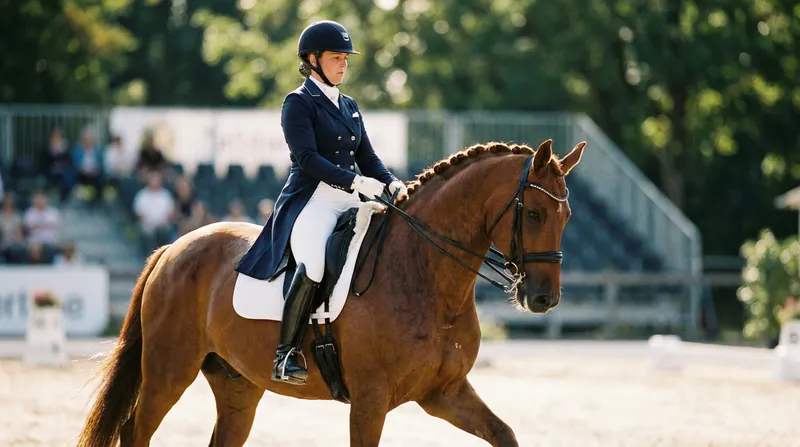
In the dressage arena, Norwegian Grand Prix rider Selina Solberg Vittinghus is facing a long road back to the saddle following a severe accident in early June. Vittinghus, the head rider at the renowned Atterupgaard breeding farm in Denmark, was enjoying a routine forest hack on June 3 when her horse spooked and bucked her off.[1]
The fall resulted in significant upper-body trauma. Vittinghus was transported to the hospital by ambulance, where doctors diagnosed her with three broken ribs, a broken shoulder, a fractured collarbone, and a concussion. Despite the extensive list of injuries, the 39-year-old maintained a remarkably grounded perspective, describing the incident as "just really bad luck" rather than a dramatic career-ender.[1]
The timing of the accident forced Vittinghus to abandon her immediate competitive goals. She had been selected to represent the Norwegian Grand Prix team at the 2026 Nordic Baltic Championships in Sweden at the end of June. The injury also paused her highly anticipated international Grand Prix debut aboard her 13-year-old Danish mare, Atterupgaards Delorean, a partnership that had been scoring consistently high marks in national big tour events earlier in the spring.[1]
Vittinghus is not the only European dressage rider managing a complex rehabilitation. Luxembourg's Mathis Goerens has spent the early summer recovering from a devastating wrist injury sustained in March. The 37-year-old Grand Prix rider, who represented his country at the 2023 European Championships, was unseated by a bucking youngster and landed heavily on his arm.[3]
The impact shattered Goerens's wrist into eight pieces, requiring immediate and intricate reconstructive surgery. His wife, Kira Ripphoff-Goerens, confirmed that the severity of the fractures mandated at least eight weeks of strict immobilization before he could even consider returning to the saddle. The extended recovery window has delayed Goerens's 2026 campaign with his top string of horses, including his Grand Prix mounts Feuerfunke and Gucci.[3]
In the high-flying world of international show jumping, six-time US Olympian McLain Ward has been forced to practice patience following a frustrating sequence of compounding injuries. Ward's troubles began during the Winter Equestrian Festival, where a fall in a jump-off resulted in a broken bone in his hand.[2][6]
Just as his hand was beginning to heal, Ward sustained a secondary back injury that derailed his spring and early summer plans. "Along with my hand, I also injured my back, which is keeping me sidelined for about a month," Ward explained to the press. The dual setbacks forced him to withdraw his 12-year-old gelding, Jordan Molga M, from the prestigious Longines FEI Jumping World Cup Final in Texas—an event Ward famously won in 2017.[2][5]
While human athletes follow strict physical therapy regimens, the sport's equine stars are receiving equally meticulous care. In the United States, the elite Grand Prix dressage mare Jane, ridden by Marcus Orlob, was sidelined this season following an unfortunate paddock injury.[4]
The 12-year-old mare, who had climbed to second on the US Grand Prix ranking list following a stellar winter circuit, was given an extended break on strict veterinary advice. Rather than rushing her recovery to meet the qualification deadlines for the national Grand Prix championships in Florida, her team opted to prioritize her long-term soundness. The cautious approach is designed to preserve Jane's immense talent for future international campaigns, including the 2028 Olympic cycle.[4]
A similar welfare-first philosophy is playing out in the demanding discipline of eventing. British rider Libby Seed recently announced that her highly consistent five-star mare, Heartbreaker Star Quality, will miss the entire 2026 season. The 15-year-old mare, affectionately known as Angel, had a near-perfect cross-country record and top-30 finishes at both Badminton and Pau.
During routine pre-season veterinary scans, Seed's team detected a minor issue. Rather than risking the mare's health over the grueling cross-country tracks, Seed immediately withdrew her from competition. "It's obviously sad, but I'm really glad that we picked it early," Seed noted, confirming that Angel will spend the year enjoying a "chilled-out time" in the field and may transition to a breeding career. "She's already given me so much – she owes us nothing."
As the July competition calendar accelerates toward the late-summer championships, the absence of these key figures reshapes leaderboards and team selections across the globe. More importantly, the transparent handling of these setbacks underscores a vital shift in modern equestrian sport: an unwavering commitment to the long-term physical welfare of both horse and rider, ensuring that when they do return to the arena, they are truly ready to fly.[1][4][5]
Key points
- Norwegian rider Selina Solberg Vittinghus is recovering from severe upper-body fractures sustained during a June forest hack.
- Luxembourg's Mathis Goerens faces an extended absence following complex surgery to repair a wrist broken in eight places.
- US show jumper McLain Ward missed the World Cup Final due to compounding hand and back injuries.
- US dressage mare Jane was withdrawn from the national championships to properly heal from a paddock injury.
- British eventer Libby Seed retired her five-star mare Heartbreaker Star Quality after a routine scan detected an early issue.
How we got here
March 2026
Mathis Goerens undergoes surgery after breaking his wrist in eight pieces during a fall.
April 2026
McLain Ward withdraws from the World Cup Final due to compounding hand and back injuries.
April 2026
US dressage mare Jane is sidelined with a paddock injury, prioritizing long-term health.
June 3, 2026
Selina Solberg Vittinghus sustains severe upper-body fractures during a forest hack.
Late June 2026
Vittinghus misses the Nordic Baltic Championships as she begins her extensive rehabilitation.
- Equine Welfare Prioritizers
- Argues that the long-term health and comfort of the horse must always supersede competition schedules.
- Rider Rehabilitation Advocates
- Focuses on the physical and mental recovery of human athletes, emphasizing time and proper medical care.
- Competitive Strategists
- Analyzes how these high-profile absences reshape national team selections and championship qualification paths.
Perspectives this story doesn't cover
- Veterinary Surgeons
- National Team Selectors
Sources
Source coverage
6 outlets
3 viewpoints surfaced





- [1]EurodressageRider Rehabilitation Advocates
Norwegian Grand Prix Rider Selina Solberg Vittinghus Injured in Riding Accident
Read on Eurodressage → - [2]World of ShowjumpingRider Rehabilitation Advocates
McLain Ward sidelined due to an additional injury, misses out on the FEI Jumping World Cup™ Final
Read on World of Showjumping → - [3]EurodressageRider Rehabilitation Advocates
Mathis Goerens Injured in Riding Accident
Read on Eurodressage → - [4]Dressage-NewsEquine Welfare Prioritizers
Jane Sidelined With Injury, Likely Out of Grand Prix Championships
Read on Dressage-News → - [5]EqunewsCompetitive Strategists
McLain Ward withdraws from 2026 FEI Longines Worldcup finals!
Read on Equnews → - [6]The Horse of Delaware ValleyRider Rehabilitation Advocates
McLain Ward has withdrawn from the World Cup due to a minor injury
Read on The Horse of Delaware Valley →
More in Sports
See all →Injury
Global Equestrian Injury Report: Landeblad Retires For Killy as Kemmerer and McLean Navigate Summer Recoveries
2 sources
Injury
Austrian Rider Astrid Neumayer Sweeps Comeback Event After Two-Year Injury Absence
5 sources
Standings
The Race to Riyadh: Saïd Holds LGCT Lead as De Freitas Barcha's Monaco Breakthrough Shakes Up the Standings
6 sources
Standings
Team USA and Fiona Howard Cement Dominance in Latest Global Para Dressage Standings
2 sources
Comments
Every angle. Every day.
Get Sports stories with full source coverage and perspective breakdowns, free every day.