
Croatia Abandons Back-Three Experiment to Restore Midfield Control Ahead of Crucial Panama Clash
Following a defensive collapse against England, head coach Zlatko Dalić is reverting to Croatia's trusted four-man backline to unlock the Modrić-Kovačić axis.
By Omar Haddad

Share this story
Croatia arrived in North America with high hopes of extending their remarkable run of deep World Cup campaigns, but a 4-2 defeat to England in their Group L opener exposed glaring structural flaws. Now, facing a must-win match against Panama at Toronto's BMO Field, head coach Zlatko Dalić is hitting the tactical reset button.[1][3]
The core issue against England was Dalić's experimental back-three system. Intended to provide extra defensive cover against elite forwards, the formation instead forced Croatia's wing-backs too deep during out-of-possession phases, effectively flattening them into a passive back five. This surrendered the midfield numerical advantage that has historically been the nation's greatest strength.[3]
To rectify this, Dalić is widely expected to revert to a traditional 4-2-3-1 or 4-3-3 formation against Panama. This structural shift is not merely about adding an extra body higher up the pitch; it is about restoring the relational distances between players that allow Croatia to dictate the tempo of a match.[2]
The defensive personnel will see a reshuffle to accommodate the back four. Joško Gvardiol, who operated as a left-sided center-back in the back three, will anchor the defense alongside Josip Šutalo. Josip Stanišić is slated to return to his natural right-back role, providing a more balanced defensive line that can step up and compress the pitch.[3]
By moving away from the back three, Dalić frees up an additional slot in the center of the park, which is where Croatia's true identity lies. The tactical blueprint relies entirely on the legendary axis of Luka Modrić and Mateo Kovačić. When these two are given the platform to orchestrate, Croatia transforms from a reactive side into a possession-heavy juggernaut.[1][2][3]
Modrić, who is poised to make his historic 200th international appearance against Panama at the age of 40, remains the ultimate pressure-release valve. Operating as a deep-lying playmaker, he routinely drops alongside the center-backs to collect the ball, using his elite spatial awareness to map the pitch before the opposition can set their defensive block.
The defining mechanism of Croatia's ball progression is their intricate use of third-man combinations. Rather than relying on rigid, pre-rehearsed passing circuits, the midfield trio adapts fluidly to the opposition's pressing triggers. Modrić frequently acts as the "second man" in these sequences, deliberately drawing a marker toward him to vacate space behind the pressing line.
Instead of taking a safe touch backward, Modrić often utilizes a first-time flick or a rapid lay-off to a supporting teammate—usually Kovačić or the energetic Martin Baturina—who is already accelerating into the newly created space. This "up, back, and through" sequence allows Croatia to bypass the first line of pressure and attack the final third with numerical superiority.[3]
Kovačić's role in this system cannot be overstated. While Modrić dictates the rhythm, Kovačić provides the ball-carrying thrust. His ability to receive the ball on the half-turn and drive through the center of the pitch forces opposing midfielders to collapse inward, which in turn creates isolation opportunities for wingers like Ivan Perišić on the flanks.[2]
Up front, the tactical shift requires a focal point capable of pinning the opposition's center-backs. Ante Budimir is expected to lead the line, offering a physical presence and aerial threat that allows Croatia's advanced midfielders to make late, untracked runs into the penalty area. Petar Musa, who scored off the bench against England, provides a dynamic alternative if Dalić opts for a more mobile attacking profile.[3]
However, Croatia's possession-heavy approach carries inherent risks, particularly against a Panama side designed to exploit transitions. Under manager Thomas Christiansen, Panama utilizes a 3-4-3 system that relies on a compact mid-block and explosive counter-attacks. If Croatia commits too many bodies forward and loses the ball in the central third, they will be vulnerable to Panama's raw pace.[1][3]
Panama's attacking trio, featuring Cecilio Waterman and the rapid Jose Luis Rodriguez, is specifically tailored to attack the spaces left behind advancing full-backs. Disrupting Modrić without overcommitting is Panama's primary defensive objective; if they can force turnovers in the middle third, their wing-backs will immediately look to spring Rodriguez into the channels.[1][3]
To counter this, Croatia must maintain a disciplined "rest-defense"—the structural positioning of players who are not directly involved in the attack. Kovačić and the defensive line will need to stagger their positioning to ensure that any Panamanian clearance is immediately intercepted, trapping the Central American side in their own half.
Ultimately, the match in Toronto represents a clash of distinct footballing philosophies: Croatia's patient, technical control versus Panama's rapid, vertical transitions. For Dalić's men, abandoning the tactical experiments and returning to the system that secured consecutive World Cup medals is the most logical path forward.[2]
If the Modrić-Kovačić engine can establish its rhythm early, Croatia possesses the tools to systematically dismantle Panama's defensive block. In a tournament where margins are razor-thin, restoring their structural identity may be exactly what the Vatreni need to reignite their World Cup campaign.[1]
Key points
- Head coach Zlatko Dalić is abandoning the back-three experiment that conceded four goals to England.
- Croatia will revert to their trusted 4-2-3-1 formation to restore defensive stability and midfield control.
- The tactical shift unlocks the legendary midfield axis of Luka Modrić and Mateo Kovačić.
- Croatia will rely on intricate 'third-man combinations' to bypass Panama's pressing lines.
- Panama's 3-4-3 system poses a significant counter-attacking threat that Croatia must manage with disciplined rest-defense.
How we got here
November 2025
Zlatko Dalić states he will 'never try to play with three at the back again' after securing qualification.
March 2026
Dalić reverses course, experimenting with a back three in friendlies against Colombia and Brazil.
June 17, 2026
Croatia's back-three system struggles defensively, conceding four goals in a World Cup opening loss to England.
June 23, 2026
Croatia prepares to revert to their trusted four-man defense for a must-win Group L match against Panama.
- Croatian Management
- Focuses on restoring defensive stability and utilizing a back four to prevent counter-attacks.
- Tactical Analysts
- Emphasizes the necessity of the Modrić-Kovačić axis and possession control to dismantle defensive blocks.
- Panamanian Counter-Attackers
- Aims to exploit the spaces left behind Croatia's advancing full-backs using rapid vertical transitions.
Perspectives this story doesn't cover
- Panamanian national team supporters hoping for a historic World Cup upset.
- Neutral fans looking for high-scoring, chaotic tournament matches.
Sources
Source coverage
3 outlets
3 viewpoints surfaced



- [1]RotoWirePanamanian Counter-Attackers
Panama vs Croatia: Predicted Lineups and Tactical Breakdown
Read on RotoWire → - [2]The GuardianCroatian Management
England World Cup 2026 team guide
Read on The Guardian → - [3]TNT SportsPanamanian Counter-Attackers
Panama vs Croatia preview: Team news, injuries and predicted XIs
Read on TNT Sports →
More in Sports
See all →Tactics
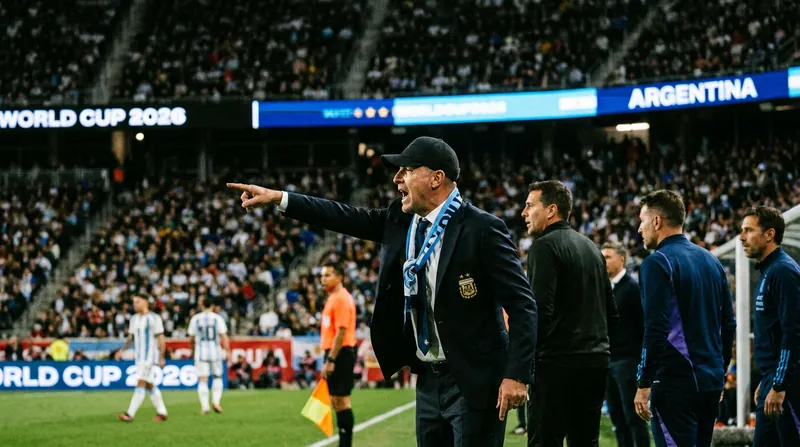
The Relational Revolution: How Argentina Replaced Positional Play with Organized Chaos
7 sources
Tactics
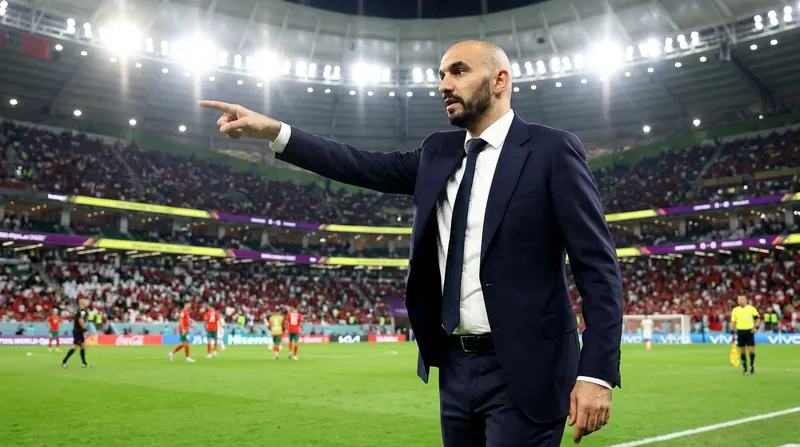
The Possession Metamorphosis: How Walid Regragui Rewrote Morocco's Tactical DNA for the 2026 World Cup
2 sources
Tactics
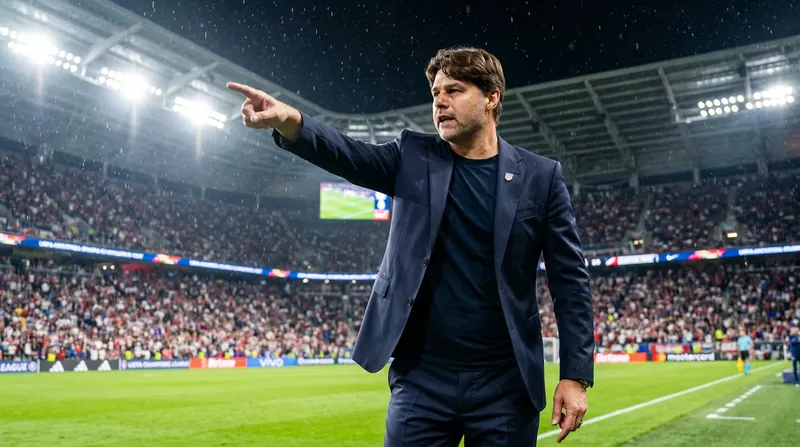
The Pochettino Press: How the United States Forged a High-Octane Identity for the 2026 World Cup
5 sources
Tactics
The Dutch Hybrid: How Ronald Koeman Reengineered the Netherlands' Tactical DNA
2 sources
Comments
Every angle. Every day.
Get Sports stories with full source coverage and perspective breakdowns, free every day.