
Audi Divides Branding Strategy Between Joint Venture Partners in China
Audi has restructured its Chinese operations, assigning its traditional four-ring brand entirely to FAW Group while directing SAIC Motor to focus exclusively on the electric AUDI letter-mark brand. The strategic split aims to eliminate internal competition and accelerate decision-making in the world's largest auto market.

Share this story
Audi has formally divided its branding strategy in China between its two joint venture partners, ending years of internal competition. Under strategic agreements announced Monday, FAW Group will take exclusive control of the traditional four-ring brand, while SAIC Motor will focus entirely on the new AUDI letter-mark brand. The move aims to clarify market positioning as the German automaker battles domestic rivals.[1][2][3]
The restructuring assigns all future combustion-engine and new energy vehicles bearing the iconic four rings to FAW Audi. This includes upcoming models like the A6L e-tron, Q6L e-tron, and the all-new A5L. FAW Audi will continue to compete directly with other legacy luxury brands and premium local automakers across both traditional and electric segments.[2][3]
SAIC Audi, meanwhile, will pivot entirely to the AUDI brand, a China-specific electric vehicle lineup that replaces the four rings with an all-capital letter logo. The division is drawn primarily along brand lines rather than powertrain types, as FAW will still produce electric vehicles. The agreements are designed to accelerate decision-making and improve responsiveness to shifting consumer demands.[1][3]
Managing the Transition
The transition away from four-ring models at SAIC Audi will not happen overnight. Audi confirmed that SAIC Audi is permitted to continue selling its existing four-ring inventory through the end of 2027. This defined transition period is intended to protect dealer interests and ensure stability for current owners.[1][2][3]
After-sales services and customer support for both four-ring and AUDI-branded vehicles will continue operating smoothly during the handover period. Audi China stated that customer services and dealer operations will proceed in an orderly manner. The company did not detail exactly how sales channels will be managed once the 2027 deadline passes.[1][3]
The divestiture represents a significant shift in production responsibilities for SAIC Audi. The joint venture had previously manufactured several four-ring models alongside its newer electric offerings. Moving forward, SAIC Audi will clear its existing four-ring inventory and dedicate its manufacturing capacity entirely to the localized new energy market.[2][3]
Resolving Internal Friction
The dual-partner strategy has historically caused friction within Audi's Chinese operations. SAIC Audi was established to sell four-ring cars alongside the much older FAW Audi partnership. The arrangement led to overlapping target demographics and internal competition between the two joint ventures.[3]
By dividing the brands entirely, Audi intends to eliminate this same-brand competition. The split allows each partner to target distinct consumer segments without cannibalizing sales. FAW Audi will leverage the four rings' decades of brand equity, while SAIC operates with the agility of a local electric vehicle startup.[1][3]
"Executing our dual-brand strategy enables our Chinese partners to deliver the best of Audi to our customers," said Johannes Roscheck, president of Audi China. "With clearer market focus and differentiated brand positioning, we are creating a stronger foundation for long-term, sustainable success in China."[1]
The AUDI Letter-Mark Strategy
The AUDI letter-mark brand is designed specifically for highly tech-savvy Chinese consumers who prioritize digital ecosystems and advanced driver assistance systems. Developed in deep collaboration with SAIC Motor, the brand relies on a jointly developed Advanced Digitized Platform tailored for the localized new energy market.[2][3]
SAIC Audi's growth focus will now rest entirely on this new brand. Its first production model, the E5 Sportback, launched in September 2025, followed by the E7X SUV in May 2026. A third model, a large battery-electric sedan, is scheduled to debut in 2027 to round out the initial lineup.[2][3]
To support the AUDI brand's long-term expansion, Audi and SAIC established the AUDI Innovation and Technology Center in Shanghai in early September. The facility employs a dedicated team working on cockpit artificial intelligence, driver assistance, and vehicle dynamics. The center is exclusively dedicated to the AUDI brand.[3]
The Shanghai technology center will spearhead the development of four new models based on the next-generation ADP 2.0 platform. The first of these advanced vehicles is scheduled to arrive in 2028. Until then, SAIC Audi must rely on its existing electric models to replace the volume lost from the four-ring divestiture.[3]
Leadership and Market Pressures
The strategic realignment coincides with a significant leadership overhaul at Audi China. The company recently announced that former Chery executive Jeff Zhang will take over as president on November 1, replacing Roscheck. Rolf Michl, chairman of Audi Sport GmbH, will simultaneously become chief operating officer under a new dual-leadership structure.[3]
The appointment of a Chinese executive to lead the regional business signals Audi's intent to strengthen local decision-making. Zhang brings over two decades of international management experience to the role. He previously held senior positions at Audi in China, where he helped build SAIC Audi's sales organization.[3]
Audi's restructuring comes as China's premium car market undergoes a rapid shift toward electrification and intelligent driving. Legacy luxury brands face mounting challenges from local competitors offering advanced digital ecosystems and rapid innovation cycles. These domestic rivals also utilize aggressive pricing strategies that appeal to younger buyers.[1][3]
The clear division of labor is intended to insulate Audi from these pressures. The success of the split will depend heavily on SAIC Audi's ability to build the new AUDI brand's prestige from scratch. Meanwhile, FAW Audi must defend the traditional brand's market share against an increasingly crowded field.[1][3]
Key points
- FAW Group will take full control of Audi's traditional four-ring brand, covering both combustion-engine and new energy vehicles.
- SAIC Motor will focus exclusively on the new AUDI letter-mark brand, which targets tech-savvy consumers with localized electric models.
- SAIC Audi will continue selling its existing four-ring inventory through the end of 2027 to ensure a smooth transition for dealers and customers.
- The restructuring aims to eliminate internal competition between the two joint ventures and accelerate Audi's response to China's rapidly evolving premium market.
What we don’t know
- How SAIC Audi's sales channels will be managed after the 2027 transition period ends.
- Whether the new AUDI letter-mark brand can achieve the same prestige and sales volume as the traditional four-ring brand.
- Audi Management
- Streamlining operations and eliminating internal competition to accelerate decision-making.
- FAW Group
- Consolidating the traditional luxury brand and its transition to new energy vehicles.
- SAIC Motor
- Capturing the tech-savvy demographic with a localized, digitally advanced electric brand.
Perspectives this story doesn't cover
- Existing SAIC Audi dealership owners
- Chinese consumers loyal to the traditional four-ring brand
Sources
Source coverage
4 outlets
3 viewpoints surfaced




- [1]China DailyAudi Management
Audi assigns Four Rings to FAW and AUDI brand to SAIC
Read on China Daily → - [2]GasgooFAW Group
Audi clarifies two-brand, two-partner strategy in China
Read on Gasgoo → - [3]CnEVPostAudi Management
Audi unveils China business split: FAW to focus on 4 rings, SAIC on AUDI
Read on CnEVPost → - [4]MarketScreener
Audi splits Chinese JVs between AUDI and four-ring brands
Read on MarketScreener →

More in Business
See all →Aviation Infrastructure
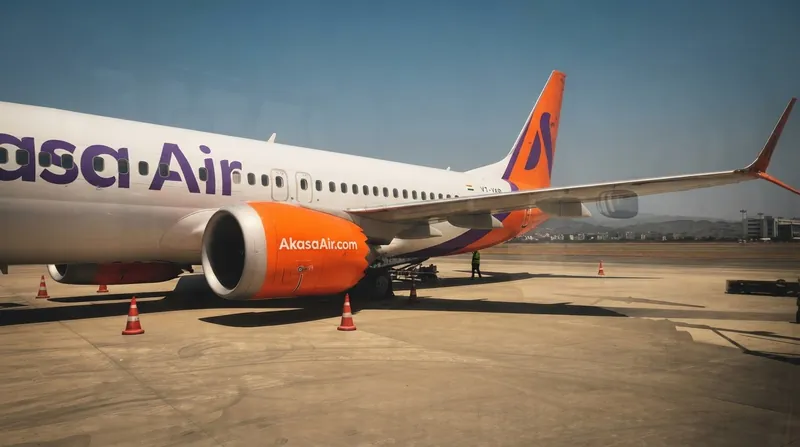
IndiGo and Air India Shift Selected Mumbai Flights to Navi Mumbai Airport
5 sources
IT Services
Infosys Trims Annual Sales Guidance Following Weak Demand Despite Profit Rise
3 sources

Automotive Markets
Volvo Cars Stock Tumbles 28% Following China Slump and 2,500 Fresh Layoffs
5 sources
Corporate Strategy
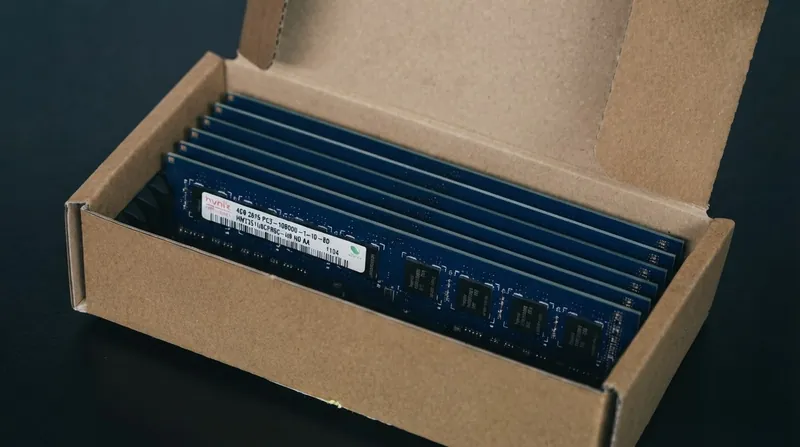
SK Hynix Abandons Solidigm US IPO Citing Market Volatility and Shareholder Backlash
5 sources
Comments
Every angle. Every day.
Get Business stories with full source coverage and perspective breakdowns, free every day.