
2026 James Beard Awards Highlight Regional Diversity and Immigrant Heritage in American Dining
The 2026 James Beard Awards celebrated a diverse array of culinary talent, with top honors going to chefs and restaurants in Philadelphia, New Orleans, and Chicago that blend immigrant heritage with local ingredients.
By Irina Belova

Share this story
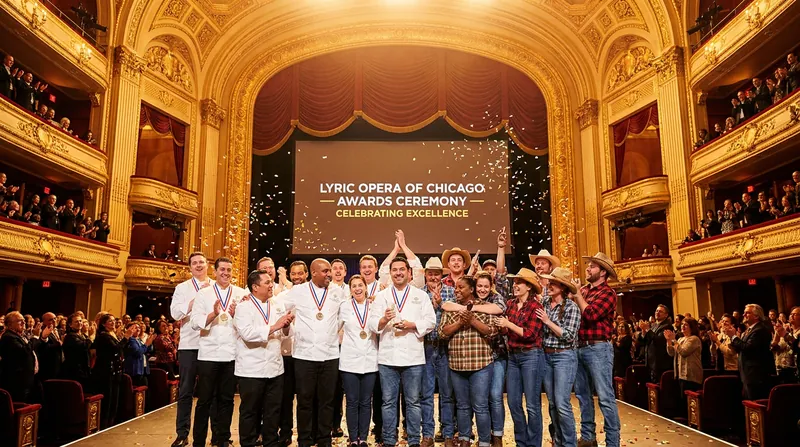
The 2026 James Beard Foundation Restaurant and Chef Awards, often dubbed the "Oscars of the food world," concluded on June 15 at the Lyric Opera of Chicago, celebrating a vibrant and diverse culinary landscape. The annual ceremony gathered more than 1,800 industry professionals to honor the chefs, restaurateurs, and beverage experts shaping the future of American hospitality.[1][2]
This year's winners underscored a continuing shift in American dining, moving the spotlight beyond traditional strongholds like New York and Los Angeles to highlight the innovative food scenes in Philadelphia, New Orleans, Chicago, and Houston. The results reflect an industry that is increasingly rewarding deeply personal, heritage-driven cooking over conventional European fine dining.[2]
Philadelphia emerged as a major winner, taking home two highly coveted awards. Chef Chutatip "Nok" Suntaranon's Kalaya was named Outstanding Restaurant, a national honor that recognizes consistent excellence in food, hospitality, and operations. The win cements Philadelphia's status as one of the most dynamic food cities in the country.
Named after Suntaranon's mother, Kalaya draws heavily on her Southern Thai heritage. The restaurant offers bold interpretations of traditional curries, stir-fries, and dumplings that have captivated diners and critics alike, proving that uncompromising, spice-forward regional cuisine can achieve the highest levels of national acclaim.[2]
The city's second victory went to Chef Jesse Ito of Royal Sushi & Izakaya, who won Best Chef: Mid-Atlantic after nine previous nominations. Ito's notoriously hard-to-book omakase counter in Queen Village has become a cornerstone of the region's dining scene, celebrated for its meticulous sourcing and execution.
In New Orleans, Chef Serigne Mbaye of Dakar NOLA was awarded Best Chef: South. Mbaye's seven-course pescatarian tasting menu explores the deep historical and culinary connections between West Africa and Louisiana, featuring dishes like jollof rice and millet beignets that tell the story of the Senegalese diaspora.[2]
The host city of Chicago celebrated its own rising star, with Jacob Potashnick of Feld winning Best Chef: Great Lakes. Located in Ukrainian Village, Feld offers an ambitious 25-to-30-course seasonal tasting menu that pushes the boundaries of local sourcing and hyper-seasonal Midwestern agriculture.[1][2]
Texas's diverse culinary landscape was also recognized on the national stage. Evelyn Garcia and Henry Lu of JŪN won Best Chef: Texas, while Adrian Torres of Maximo in West University Place took home the Emerging Chef award, highlighting Houston's unique blend of Latin American, Asian, and Southern influences.[2]
While regional cities shined, traditional culinary capitals still had their moments. Michael Tusk of San Francisco's Quince was named Outstanding Chef, honoring his long-standing commitment to artistic fine dining and exceptional hospitality in the historic Jackson Square neighborhood.[2]
The beverage side of the industry saw Lee Campbell of Borgo in New York win Outstanding Professional in Beverage Service. Meanwhile, Portland, Oregon's Scotch Lodge took home the award for Outstanding Bar, cementing the Pacific Northwest's reputation for world-class craft cocktails and curated spirits.[1]
Clare Reichenbach, CEO of the James Beard Foundation, noted that as the organization marks its 40th year, independent restaurants remain vital to the cultural and economic fabric of the country. She emphasized that this year's winners embody excellence across multiple dimensions, meeting exceptional craft with purpose and community leadership.
For food lovers and travelers, the 2026 winners list offers a compelling roadmap for culinary tourism. The awards prove that exceptional, deeply personal dining experiences can be found in every corner of the United States, driven by chefs who are proudly cooking the food of their ancestors.[2]
Viewpoints in depth
Regional Food Advocates
Champions of secondary markets who believe the best American food is no longer confined to the coasts.
For years, culinary tourism in the United States was largely restricted to New York, Los Angeles, and San Francisco. Regional food advocates argue that the 2026 James Beard Awards validate a long-overdue shift. By awarding top national honors to cities like Philadelphia and highlighting hyper-local fusion in New Orleans and Houston, they believe the industry is finally recognizing that lower overhead costs and tight-knit communities in secondary markets allow chefs to take greater creative risks and cook more authentic, heritage-driven food.
Fine Dining Traditionalists
Supporters of classic, high-end hospitality who value the rigorous standards of legacy institutions.
While celebrating the rise of casual and deeply personal neighborhood spots, fine dining traditionalists point to wins like Michael Tusk's Outstanding Chef award for Quince as proof that classic, rigorous hospitality still matters. This camp argues that the immense operational discipline, extensive wine programs, and artistic plating found in legacy fine-dining institutions provide a foundational standard of excellence that elevates the entire industry, even as dining trends become more relaxed.
Immigrant Culinary Voices
Chefs and advocates who view food as a medium for cultural storytelling and historical preservation.
For many of this year's winners, cooking is an act of cultural preservation. Chefs like Serigne Mbaye and Chutatip Suntaranon view their menus not just as meals, but as educational experiences that trace the lineage of their ancestors. This perspective emphasizes that the future of American cuisine is inherently tied to the immigrant experience, using local ingredients to tell global stories and honoring the historical contributions of marginalized communities to the nation's foodways.
Key points
- Philadelphia's Kalaya won Outstanding Restaurant, highlighting its bold Southern Thai cuisine.
- San Francisco's Michael Tusk of Quince took home the Outstanding Chef award.
- Chef Serigne Mbaye of Dakar NOLA won Best Chef: South for his Senegalese-Louisiana tasting menu.
- The awards highlighted a continuing shift toward regional dining hubs like Chicago, Houston, and New Orleans.
What we don’t know
- How the increased national spotlight and influx of culinary tourists will impact reservation availability and pricing at the winning neighborhood restaurants.
- Whether the trend of honoring highly personal, heritage-driven tasting menus will influence the business models of larger, corporate-backed restaurant groups.
How we got here
1990
The James Beard Foundation Awards are established to recognize culinary excellence in the United States.
2020-2021
The awards undergo a comprehensive audit to address systemic bias and improve diversity among nominees and winners.
January 2026
The Foundation announces the semifinalists, featuring a record number of chefs from secondary and emerging food markets.
June 15, 2026
The 2026 Restaurant and Chef Awards ceremony is held at the Lyric Opera of Chicago.
- Regional Food Advocates
- Champions of secondary markets who believe the best American food is no longer confined to the coasts.
- Immigrant Culinary Voices
- Chefs and advocates who view food as a medium for cultural storytelling and historical preservation.
- Fine Dining Traditionalists
- Supporters of classic, high-end hospitality who value the rigorous standards of legacy institutions.
Perspectives this story doesn't cover
- Front-of-house staff and line cooks who execute the award-winning menus but rarely share in the public recognition.
- Local regular diners who may be priced out or unable to secure reservations at their neighborhood spots following a national award win.
Sources
Source coverage
2 outlets
3 viewpoints surfaced


- [1]James Beard FoundationImmigrant Culinary Voices
The 2026 James Beard Restaurant and Chef Award Winners
- [2]ForbesFine Dining Traditionalists
ATEEZ, BOYNEXTDOOR Dominate Seoul Music Awards 2026: Full Winners List
Read on Forbes →
More in Food & Drink
See all →Restaurant Tech
Restaurants Are Deploying Back-of-House AI to Bring Back 'Hyper-Hospitality'
3 sources
Sustainable Dining
2026 James Beard Awards Highlight Climate Action and Community Impact Alongside Culinary Excellence
5 sources
Hyper-Cultural Dining
From Heritage to Haute Cuisine: Indigenous and Hyper-Cultural Menus Reshape Fine Dining in 2026
4 sources
Sustainable Dining
Zero-Waste Dining Becomes the New Standard as Michelin Evolves Its Sustainability Awards
1 sources
Comments
Every angle. Every day.
Get Food & Drink stories with full source coverage and perspective breakdowns, free every day.