
World Snooker Tour Health Update: Luca Brecel and Mark Selby Overcome Major Setbacks
Former world champions Luca Brecel and Mark Selby are successfully returning to elite snooker after navigating severe physical and mental health challenges, highlighting the hidden toll of the professional tour.
Share this story
The World Snooker Tour is a grueling, 11-month global circuit that demands absolute precision, often taking a severe hidden toll on its elite competitors. While the sport is low-impact compared to contact athletics, the physical and mental stamina required to compete at the highest level can break even the most seasoned champions.
Recently, the tour has seen a wave of high-profile medical absences, forcing a broader conversation about player welfare. Leading this shift are former world champions Luca Brecel and Mark Selby, both of whom are mounting inspiring returns to the baize after navigating debilitating health setbacks.[1][2]
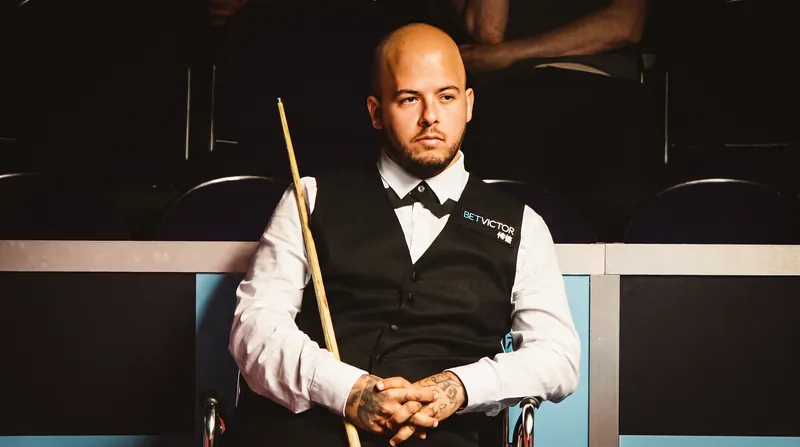
For 2023 World Champion Luca Brecel, the past year has been defined by a baffling physical battle. The "Belgian Bullet" was forced into an extended hiatus, withdrawing from multiple major events, including the Saudi Arabia Masters and the Wuhan Open, due to a mystery illness. The condition left him unable to practice, travel, or maintain his fitness regimen, causing his world ranking to slip outside the top 16 as he prioritized his recovery over ranking points.[1]
Brecel's search for answers was exhausting. The 31-year-old revealed that he visited doctors roughly 18 times over a four-month period, yet medical professionals remained baffled by his symptoms. "There must be something wrong, but they cannot find anything," Brecel noted, dispelling rumors that his absence was related to mental health. The physical toll meant he could not engage in the long-distance running and cycling he relies on to stay sharp, leading to weight gain and a loss of table readiness.[1]
Despite the frustrating diagnostic dead-ends, Brecel has recently turned a corner, focusing on what he can control. Embracing an optimistic mindset, he has slowly reintroduced cycling and running into his routine, declaring that he is finally starting to "feel normal again." While acknowledging that he is not yet at peak physical fitness, Brecel's return to the table marks a significant personal victory, proving his resilience after months of uncertainty and physical discomfort.[1]
While Brecel's battle has been strictly physical, Mark Selby's recent health journey highlights the equally devastating impact of mental illness in elite snooker. The four-time world champion has been remarkably transparent about his severe clinical depression, a condition rooted in childhood trauma that nearly ended his career. In the summer of 2024, following a crushing defeat at the Crucible, Selby reached a breaking point, admitting he was ready to walk away from the sport entirely.[2]
Selby described a harrowing reality behind the scenes, where he would lock himself in his hotel room crying, unable to practice, and stepping out to play televised matches while feeling completely hollow. The turning point came when he sought professional psychiatric help. His doctor advised him that while he might never fully "cure" his depression, he could learn to manage it by prioritizing his well-being over his tournament schedule and stepping away when the pressure became too much.[2]
Taking that medical advice to heart, Selby stepped away from the table to focus on his recovery. When he returned, the transformation was staggering. Playing with a renewed perspective—treating snooker as a game rather than a life-or-death obligation—Selby captured the UK Championship, the Champion of Champions, and the Welsh Open. His triumphant comeback stands as a powerful testament to the performance benefits of prioritizing health and seeking professional help.[2][4]
The openness of players like Brecel and Selby is catalyzing a cultural shift within the sport. Historically, snooker has been a solitary, stoic game where showing vulnerability was viewed as a weakness. Now, top players are actively calling for systemic changes to protect the roster. Selby has become a vocal advocate for having dedicated mental health professionals stationed at all ranking tournaments, ensuring players have immediate support when crises hit during long stretches away from home.[2][5]
This push for better medical infrastructure is gaining traction among other heavyweights. Seven-time world champion Ronnie O'Sullivan, who recently withdrew from the Masters on medical grounds, has publicly backed Selby's proposal. O'Sullivan emphasized that the unpredictable nature of health struggles means players need on-site resources, rather than being forced to choose between suffering in silence or withdrawing entirely from prestigious events.[3][5]
Ultimately, the inspiring returns of Brecel and Selby are rewriting the narrative around injuries and health in snooker. By refusing to hide their struggles, they are dismantling the stigma that has long plagued the tour. Their journeys prove that stepping away to heal—whether from a baffling physical ailment or a severe mental health crisis—is not a career-ender, but a necessary step toward longevity and sustained excellence on the green baize.[2][4]
Key points
- Former World Champion Luca Brecel is returning to fitness after a mystery physical illness kept him out for months.
- Brecel visited doctors 18 times but received no clear diagnosis, forcing him to focus on gradual physical rehabilitation.
- Mark Selby has successfully returned to the top of the sport after seeking psychiatric help for severe clinical depression.
- Top players, including Selby and Ronnie O'Sullivan, are now advocating for dedicated mental health professionals at all ranking tournaments.
How we got here
Summer 2024
Mark Selby reaches a breaking point with severe depression and considers quitting the sport before seeking medical help.
April 2025
Luca Brecel plays his last match before a mystery physical illness forces him into an extended medical hiatus.
September 2025
Brecel opens up about his frustrating search for a diagnosis after 18 doctor visits in four months.
Early 2026
Selby wins multiple titles post-recovery, while Brecel resumes fitness training and returns to the baize.
- Player Welfare Advocates
- Argue that the grueling 11-month snooker calendar requires dedicated on-site medical and psychiatric support to protect athletes from burnout and injury.
- The Players
- Emphasize the importance of breaking the stigma around physical and mental health, prioritizing long-term well-being over short-term ranking points.
- Tour Management
- Focused on balancing a packed, lucrative global schedule while accommodating medical exemptions and supporting player longevity.
Perspectives this story doesn't cover
- Sports Psychologists
Sources
Source coverage
5 outlets
3 viewpoints surfaced





- [1]The MirrorThe Players
Snooker star Luca Brecel lifts lid on mystery illness that has left doctors baffled
Read on The Mirror → - [2]Pub TalkPlayer Welfare Advocates
Mark Selby opens up on mental health struggles and return to form
- [3]The GuardianThe Players
Ronnie O'Sullivan pulls out of snooker's Masters on medical grounds
Read on The Guardian → - [4]World Snooker TourTour Management
World Snooker Tour Official Updates
- [5]EurosportPlayer Welfare Advocates
O'Sullivan and Selby call for on-tour mental health support
More in Sports
See all →Standings
Snooker Standings: Noppon Saengkham and David Gilbert Crash the Top Three in Early One-Year Rankings Race
6 sources
Standings
Snooker Standings: Jack Lisowski and Zhang Anda Hunt Top-16 Berths as Elite Race Intensifies
4 sources
Injury
Snooker Pro Ian Burns Bedbound After Freak Fairground Ride Injury
3 sources
Injury
Snooker Injury Report: Former World Champion Luca Brecel Returns to Health After Mysterious Illness
6 sources
Comments
Every angle. Every day.
Get Sports stories with full source coverage and perspective breakdowns, free every day.