
Why Passport Check Digits Use 7-3-1 Weights to Catch Scanning Errors, Not Criminal Records
The machine-readable zone on a passport relies on a modulo-10 algorithm to detect optical character recognition failures. The trailing numbers are mathematical checksums, debunking the persistent myth that they encode a traveler's criminal history.

Share this story
In short
- The Machine Readable Zone uses a modulo-10 checksum with 7-3-1 weights to verify that optical scanners read passport data correctly.
- Check digits are derived entirely from printed biographical data, debunking the myth that they encode a traveler's criminal record or customs flags.
- The algorithm is an error-detecting code, not an anti-forgery measure, as anyone can calculate the correct check digit for fabricated data.
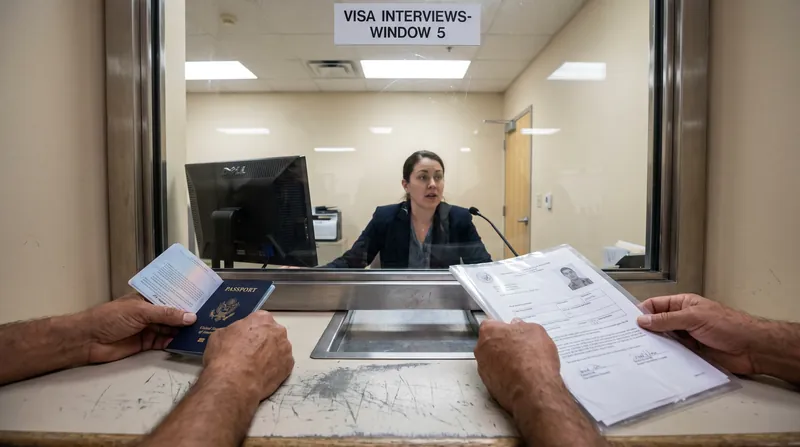
When a traveler hands their passport to a border officer, the booklet is placed onto a glass platen to scan the text at the bottom of the photo page. This optical character recognition step is where the system determines if the printed data is internally consistent. If the scanner misreads a single character, the verification process halts.[1]
The text block is known as the Machine Readable Zone (MRZ), a format standardized globally by the International Civil Aviation Organization under Doc 9303. For a standard Type 3 passport booklet, the MRZ consists of two lines of 44 characters each. It encodes the holder's name, nationality, date of birth, sex, and document expiration date.[1][2]
To ensure the scanner reads these details perfectly, the MRZ employs a mathematical error-detecting code known as a modulo-10 checksum. Every critical numeric field, such as the passport number or the date of birth, is immediately followed by a single check digit. This digit is not randomly assigned, nor does it connect to an external database.[2][3]
The 7-3-1 Weighting Algorithm
The check digit is calculated using a specific repeating sequence of weights: 7, 3, and 1. Each character in the data field is assigned a numeric value, with digits keeping their face value and letters assigned numbers from 10 to 35. The filler character, represented by a chevron, is valued at zero.[2]
To generate the check digit, the system multiplies the first character's value by 7, the second by 3, the third by 1, and then repeats the pattern for the rest of the field. The resulting products are added together to create a total sum.[2][3]
The final step applies a modulo-10 operation, meaning the total sum is divided by 10, and the remainder becomes the check digit. For example, if the weighted sum of a date of birth field is 316, the remainder when divided by 10 is 6. The check digit printed on the passport is exactly 6.[2][3]
Beyond the individual fields, the MRZ includes a final composite check digit at the very end of the second line. This overarching checksum applies the same 7-3-1 weighting to the passport number, date of birth, expiration date, and personal number fields combined. It ensures the entire string of critical data remains structurally intact.[1][2]
Catching Optical Transcription Errors
This mathematical relationship is highly sensitive to transcription errors. If an optical scanner misreads a "5" as an "8", the weighted sum changes, and the resulting modulo-10 remainder will no longer match the printed check digit. The system instantly flags the mismatch and prompts the officer to manually review the document.[2][3]
The 7-3-1 weighting sequence was chosen specifically because it catches the most common optical character recognition failures. Unlike a simple addition checksum, multiplying adjacent numbers by different weights ensures that transposed digits will produce a different final sum. Typing "19" instead of "91" triggers an immediate error.[2]
The algorithm also accounts for the physical limitations of early scanning hardware. When the standard was developed in the 1980s, cameras frequently confused similar-looking characters in the OCR-B font. The weighted modulo-10 system provided a lightweight, offline method to verify data without requiring heavy computational power at the border desk.[1][2]
Because the algorithm is public and standardized across all member states, the check digit serves purely as an error-detecting code rather than an anti-forgery measure. A forger can easily calculate the correct check digit for a fabricated date of birth. Modern passports rely on embedded cryptographic chips to prevent tampering.[1][3]
Debunking the Criminal Record Myth
The transparency of the Doc 9303 algorithm directly debunks a persistent travel myth: that the trailing numbers in the MRZ indicate how many times a person has been flagged by customs. The digits are entirely derived from the traveler's printed biographical data. They contain no hidden tracking information.[3]
Another common variation of the myth suggests the final composite check digit reveals a traveler's criminal record. If a criminal conviction were encoded into the passport's text, the document would have to be reissued every time a traveler's legal status changed. The MRZ is static from the moment the passport is printed.[3]
Instead, border control systems check for criminal history by querying secure law enforcement databases using the verified name and date of birth extracted from the MRZ. The passport itself simply provides the search parameters. The document acts as a key, not as the database itself.[1][3]
By isolating the physical document's integrity from external background checks, the modulo-10 checksum ensures that scanners can operate offline. The 7-3-1 algorithm guarantees that the data sent to the database is exactly what was printed on the page. This leaves no room for hidden variables or secret records.[2][3]
How we did this
- Method
- Recomputing the ICAO Doc 9303 Modulo-10 checksum using the 7-3-1 weighting algorithm on a sample passport date of birth to demonstrate how a single-digit transcription error alters the final sum and invalidates the check digit.
- What we found
- A single-digit error (e.g., changing a birth year from 81 to 82) shifts the weighted sum by 7, 3, or 1, guaranteeing the modulo-10 result changes. This proves the mechanism is purely mathematical error-detection for optical character recognition, not a hidden database flag or criminal record indicator.
- What we worked from
- The 7-3-1 repeating weight sequence and modulo-10 rule: Weights 7, 3, 1 applied sequentially; sum modulo 10 — International Civil Aviation Organization
- Machine Readable Zone (MRZ) data layout and check digit placement: Date of birth field followed immediately by a single check digit — Wikipedia
- Limits of this analysis
- This analysis only proves the mathematical function of the check digit; it cannot verify whether border control systems separately query external criminal databases using the extracted data.
Key terms
- Machine Readable Zone (MRZ)
- The two lines of standardized text at the bottom of a passport page designed to be read by optical scanners.
- Modulo-10
- A mathematical operation that divides a sum by 10 and uses the remainder as the final check digit.
- ICAO Doc 9303
- The global standard published by the International Civil Aviation Organization that defines the format and security features of travel documents.
- Check Digit
- A single number appended to a data field that verifies the preceding characters were read or entered correctly.
- Optical Character Recognition (OCR)
- Technology that converts images of typed or printed text into machine-encoded text.
Frequently asked
Does the check digit prevent someone from forging a passport?
No. The algorithm is public, meaning a forger can easily calculate the correct check digit for fabricated data. True anti-forgery security relies on the passport's embedded cryptographic chip.
What happens if the scanner misreads a character?
The software recalculates the weighted sum based on the misread text. Because the new sum's modulo-10 remainder will not match the printed check digit, the system flags an error and requires manual review.
Why are letters included in the checksum calculation?
Certain fields, like the passport number, contain both letters and numbers. ICAO Doc 9303 assigns a specific numeric value to each letter (A=10 through Z=35) so they can be multiplied by the 7-3-1 weights.
Viewpoints in depth
Border Security Engineers
Value the MRZ checksum as a reliable, offline method to catch optical scanning errors before querying external databases.
For the engineers designing airport e-gates and immigration software, the primary challenge is data fidelity. Optical character recognition is imperfect, and a single misread digit in a passport number can cause a background check to fail or return the wrong person's record. The 7-3-1 modulo-10 algorithm provides an immediate, offline validation step. By mathematically proving that the scanned string matches the printed string, engineers ensure that the data sent to law enforcement databases is accurate, reducing false positives and manual processing delays.
Privacy Advocates
Emphasize that the MRZ contains only basic biographical data, dispelling fears of hidden tracking codes or criminal flags.
Privacy organizations frequently address public concerns about government tracking and hidden data embedded in travel documents. By pointing to the transparent, publicly available ICAO Doc 9303 standard, advocates demonstrate that the Machine Readable Zone is nothing more than a digitized version of the printed photo page. The check digits are purely mathematical derivatives of the holder's birth date, expiration date, and document number. This transparency is crucial for maintaining public trust, proving that passports do not carry secret criminal records or behavioral scores.
- Border Security Engineers
- Value the MRZ checksum as a reliable, offline method to catch optical scanning errors before querying external databases.
- Privacy Advocates
- Emphasize that the MRZ contains only basic biographical data, dispelling fears of hidden tracking codes or criminal flags.
- Travel Document Analysts
- Note that while the checksum ensures data integrity, it is not an anti-forgery tool, requiring cryptographic chips for true security.
Perspectives this story doesn't cover
- Counter-Fraud Analysts
- Frequent Travelers
Sources
Source coverage
3 outlets
3 viewpoints surfaced



- [1]WikipediaTravel Document Analysts
Machine-readable passport
Read on Wikipedia → - [2]International Civil Aviation OrganizationBorder Security Engineers
Doc 9303, Machine Readable Travel Documents
Read on International Civil Aviation Organization → - [3]Factlen Editorial TeamPrivacy Advocates
Synthesis by Factlen editorial team
Read on Factlen Editorial Team →

More in Travel
See all →Consular Law
Article 4 of the 1930 Hague Convention Bars Consular Protection When Dual Citizens Are Detained in Their Other Homeland
4 sources

ESTA Restrictions
The March 1, 2011, Threshold: How Travel to Iran, Iraq, Sudan, and Syria Actually Triggers US ESTA Ineligibility
6 sources

US Citizenship
The 5-Year/3-Year Residency, Physical Presence, and Good Moral Character Tests: How the USCIS Actually Determines Eligibility for US Naturalization
5 sources

Visa Policy
The 'Immigrant Intent' Presumption: How the 214(b) Rule Actually Dictates Non-Immigrant Visa Approvals
8 sources
Comments
Every angle. Every day.
Get Travel stories with full source coverage and perspective breakdowns, free every day.