
The Postseason Bubble: Surfers Scramble for Top 22 Survival as the WSL Tour Heads to Jeffreys Bay
With only four regular-season events remaining, the race to secure a spot in the World Surf League's new exclusive postseason is intensifying. Surfers are battling to stay above the cutline ahead of the Corona Open J-Bay, highlighting a season defined by high stakes and a return to cumulative points.

Share this story
The 2026 World Surf League (WSL) Championship Tour has reached its critical summer stretch. As the world's best surfers descend on South Africa for the Corona Open J-Bay, beginning July 10, the focus has shifted entirely to the standings.
With the season crossing its midpoint, the narrative is no longer just about individual event victories; it is about survival. The world's elite are acutely aware that the window to secure their championship dreams is rapidly closing, setting the stage for a dramatic showdown on one of the most iconic right-hand point breaks on the planet.[3]
This year, the WSL abandoned the controversial 'Final 5' winner-take-all format, returning to a traditional cumulative points system that purists have long championed. However, the league introduced a new twist that has kept the pressure at an absolute boiling point: a strict 'postseason' cut. Rather than allowing the entire field to coast through the back half of the year, the new structure demands relentless consistency, ensuring that every single heat carries monumental weight for the athletes involved.
After the first nine 'regular-season' events conclude, the field of 36 men and 24 women will be ruthlessly slashed. Only the top 22 men and top 14 women will advance to the final two postseason events in Abu Dhabi and Portugal. From there, the entire field reunites for the Pipe Masters finale, but those who miss the postseason cut will have lost crucial opportunities to accumulate the points necessary to challenge for the ultimate prize: the World Title.[2][3]
With five events in the rearview mirror and only four regular-season stops remaining—J-Bay, Teahupo'o, Cloudbreak, and Lower Trestles—the middle of the leaderboard has become a fierce battleground. Surfers who stumbled during the early Australian leg or the recent stops in the Americas are now facing a mathematical reality. The margin for error has vanished, and the scramble to secure a spot above the cutline is dictating strategy, board selection, and heat management across the board.[3]
'The maths is straightforward but unforgiving,' notes Boardriders in their mid-season analysis. A regular-season win awards a massive 10,000 points, while early exits offer a mere fraction of that total. This steep drop-off essentially forces competitors to surf for the win rather than just surfing to survive. The days of playing it safe and grinding out mid-tier finishes are over; to make the postseason, surfers must take risks and push the boundaries of high-performance surfing.
On the men's side, the bubble watch is providing some of the season's most compelling narratives. Australian rookie George Pittar has been an absolute revelation, surging safely into the upper echelon after a breakout performance during the Australian leg. Pittar's ability to seamlessly transition from the Challenger Series to the elite Championship Tour has turned heads, proving that the new generation is more than capable of handling the immense pressure of the revamped 2026 format.
While rookies like Pittar thrive, seasoned veterans find themselves fighting for their competitive lives. Moroccan surfer Ramzi Boukhiam, who inherited John John Florence's season wildcard after the Hawaiian opted to take a sabbatical, is battling right on the edge of the Top 22 cutline. For surfers in Boukhiam's position, the upcoming event at J-Bay is not just another tour stop; it is a critical lifeline that could define the trajectory of their entire professional careers.[3]
The women's tour, which was expanded to 24 surfers this year, is seeing an equally dramatic scramble for the Top 14. The influx of fresh talent has deepened the competitive pool, making every heat a potential upset. Established stars can no longer rely on their seeding to guarantee an easy path to the quarterfinals, as the new arrivals are hungry, fearless, and eager to claim their own spots in the highly lucrative postseason events.[3]
Veteran Lakey Peterson has capitalized beautifully on the new format, finding a remarkable career resurgence. Following a clutch, hard-fought victory in the wild conditions of Western Australia, Peterson has vaulted up the rankings. Her success proves that experience, wave knowledge, and tactical patience still pay massive dividends when the pressure mounts, providing a blueprint for other veterans looking to secure their place above the dreaded Top 14 cutline.
Just below Peterson, the women's bubble is an absolute logjam of talent. Returning eight-time world champion Stephanie Gilmore and rising star Bella Kenworthy are trading blows near the 14th spot, setting up a fascinating generational clash. Every heat they surf is essentially a must-win scenario, and their battle for postseason survival will likely be decided in the heavy, unforgiving water of Tahiti or Fiji later this summer.[3]
Adding to the incredible intensity of the bubble race is the WSL's decision to remove the elimination round for the 2026 season. In previous years, surfers had a safety net—a second chance to redeem themselves after a poor opening heat. Now, surfers who lose their first matchup are immediately knocked out of the event. This means a single bad wave selection or a minor tactical error at J-Bay could spell absolute disaster for a surfer's postseason hopes.
'With the updated formats, we'll see higher stakes from day one, with every heat carrying real consequence throughout the season,' WSL CEO Ryan Crosby explained prior to the season launch. That prediction has proven entirely accurate, as the sudden-death nature of the opening rounds has injected a palpable sense of urgency into the broadcasts, thrilling fans but pushing the athletes to their absolute physical and mental limits.
The upcoming schedule offers absolutely no reprieve for those hovering on the bubble. After the long, perfect, thigh-burning walls of Jeffreys Bay, the tour heads straight into the terrifying reef breaks of Teahupo'o in August and Cloudbreak in early September. These locations demand a completely different skill set, requiring immense courage and technical barrel-riding proficiency that will test the mettle of every single surfer fighting for their postseason life.[1]
These heavy-water venues heavily favor specialists and seasoned barrel riders, meaning the current standings could be completely upended before the final regular-season horn sounds at Lower Trestles. A surfer currently sitting comfortably inside the cutline could easily suffer back-to-back early exits in Tahiti and Fiji, while a bubble surfer willing to pack a massive, dangerous barrel could catapult themselves into the postseason with a single, heroic event victory.[3]
Ultimately, the 2026 format changes have succeeded in their primary goal: making every single event, and every single heat, matter deeply. As the tour enters its crucial second half, the race for the postseason bubble is delivering the most dramatic, high-stakes, and genuinely uplifting surfing the Championship Tour has seen in years, rewarding true consistency and resilience on the world's biggest stage.[2]
The essentials
- The 2026 WSL Championship Tour has eliminated the 'Final 5' format, returning to a cumulative points system with a strict postseason cut.
- Only the top 22 men and top 14 women will advance past the regular season to compete in Abu Dhabi and Portugal.
- With four regular-season events remaining, the upcoming Corona Open J-Bay is a critical battleground for surfers hovering on the bubble.
- The removal of the elimination round means surfers face sudden-death pressure from their very first heat, heightening the stakes of every wave.
Timeline
April 2026
The 2026 Championship Tour kicks off at Bells Beach with the new cumulative points format.
May 2026
George Pittar and Lakey Peterson secure crucial early-season victories during the Australian leg.
July 2026
The tour arrives at Jeffreys Bay with the postseason bubble race intensifying.
September 2026
The regular season will conclude at Lower Trestles, finalizing the Top 22 men and Top 14 women.
December 2026
The World Champions will be crowned following the high-stakes Pipe Masters finale.
- Tour Veterans
- Appreciate the return to cumulative points but face immense pressure from the no-elimination format.
- The New Generation
- Thrive on the high-stakes, heat-by-heat pressure of the new format.
- Neutral Analysts
- View the 2026 format as a massive success for fan engagement and competitive drama.
Perspectives this story doesn't cover
- Local South African Surfers
- Challenger Series Hopefuls
Sources
Source coverage
3 outlets
3 viewpoints surfaced



- [1]SurferNeutral Analysts
The World Surf League Adds Philippines Pro, Adjusts Postseason Schedule
Read on Surfer → - [2]Shop Eat SurfNeutral Analysts
WSL Announces Cloud 9 Addition for 2026 Postseason
Read on Shop Eat Surf → - [3]World Surf LeagueNeutral Analysts
2026 Championship Tour Rankings and Format
Read on World Surf League →
More in Sports
See all →Standings
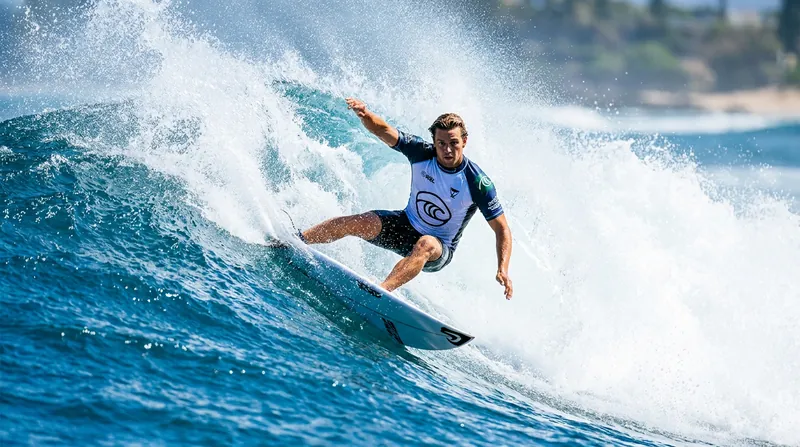
15-Year-Old Tya Zebrowski Surges in WSL Standings After Historic Rio Pro Finals Run
2 sources
Standings
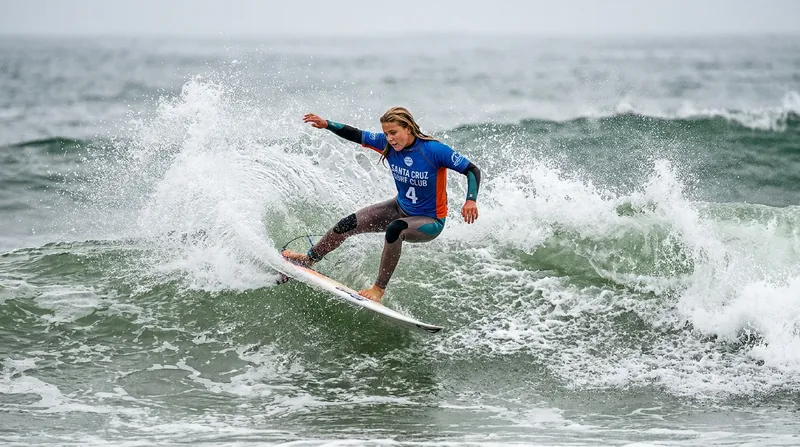
WSL Standings Watch: Gabriela Bryan Defends Yellow Jersey as the Brazilian Storm Engulfs the Men's Top 10
3 sources
Injury
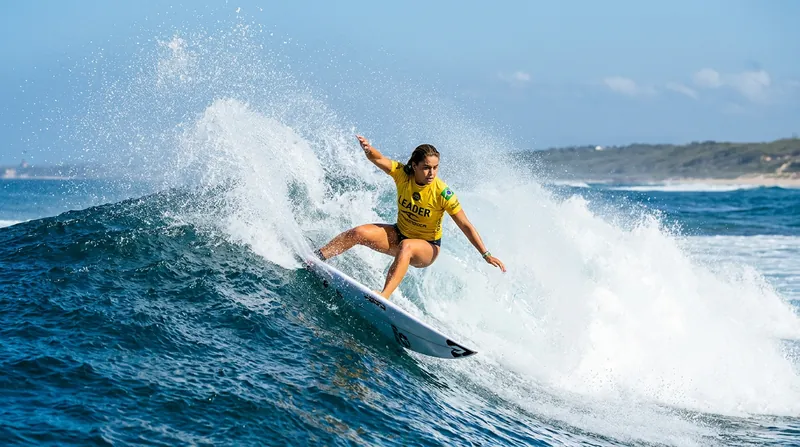
WSL Injury Report: Ewing and Colapinto Overcome Major Surgeries as Slater Eyes Return
4 sources
Injury
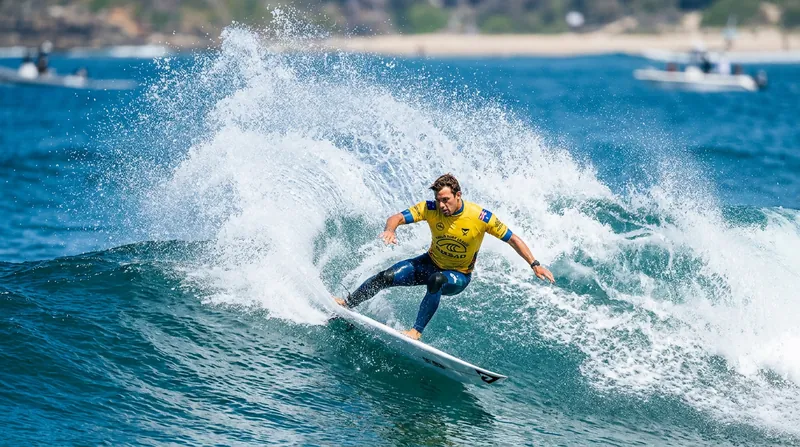
WSL Injury Report: Photographer Ed Sloane Hospitalised After Wildlife Attack Halts New Zealand Pro
4 sources
Comments
Every angle. Every day.
Get Sports stories with full source coverage and perspective breakdowns, free every day.