
The 20-30% Digestion Tax: How Protein's Thermic Effect Compares to Carbohydrates and Fats
The body expends significantly more energy breaking down protein than other macronutrients, creating a passive metabolic advantage. Shifting dietary composition can alter daily calorie expenditure by up to 100 calories without additional exercise.
By Jun Zhao

Share this story
In short
- The thermic effect of food (TEF) is the energy the body burns simply to digest and absorb nutrients.
- Protein requires the most energy to process, burning 20% to 30% of its total calories during digestion.
- Fats are the most easily absorbed macronutrient, costing only 0% to 3% of their calories to digest.
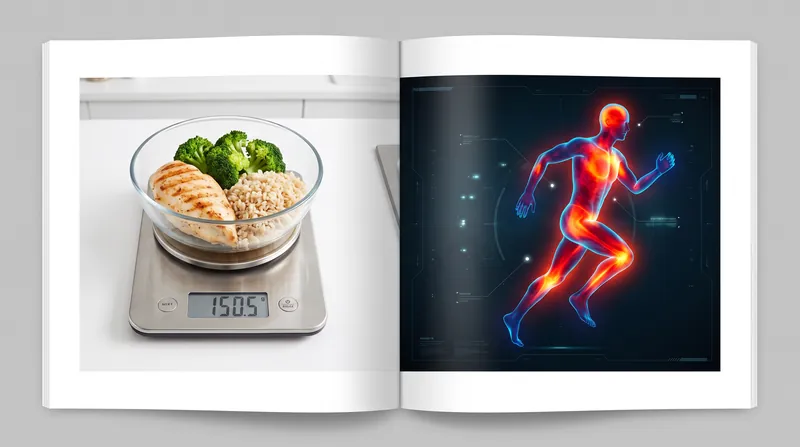
A 30-minute session on an elliptical machine actively forces the body to burn energy through muscular contraction, a deliberate and conscious effort. The thermic effect of food operates on the exact same energy currency, but it does so passively, demanding calories simply to dismantle the meals consumed. Where cardiovascular exercise requires dedicated time, digestion is a mandatory metabolic tax levied on every macronutrient that enters the stomach.
That tax is not applied equally across the plate. According to the Rutgers Cooperative Extension, "The thermic effect of food is the energy required for digestion, absorption, and disposal of ingested nutrients," and it accounts for roughly 10% of total daily energy expenditure for the average adult. However, that 10% figure is merely a blended average of a highly variable underlying reality dictated by what exactly is being digested.
Dietary fat represents the most efficient fuel source for the human body to process. Because its chemical structure requires minimal conversion to be stored in adipose tissue or utilized for energy, the thermic effect of fat sits between zero and 3%. If a person consumes 100 calories of olive oil or butter, their body spends a maximum of three calories processing it, leaving 97 calories available for immediate use or long-term storage.
Carbohydrates occupy the middle ground of metabolic effort. Breaking down complex starches into usable glucose requires a moderate investment of enzymatic activity. Research published in Nutrition & Metabolism notes that the thermic effect of carbohydrates ranges from 5% to 10%. A 100-calorie portion of oats or rice demands up to 10 calories just to digest, yielding a net of 90 calories to the body.
Protein forces the body to work significantly harder. The metabolic cost of digesting, absorbing, and assimilating dietary protein ranges from 20% to 30%. When an individual consumes 100 calories of chicken breast, lentils, or tofu, the body burns up to 30 of those calories simply cleaving the complex peptide bonds and managing the resulting nitrogen waste.
The sheer mechanical difficulty of processing amino acids explains this divergence. A 2004 critical review in the Journal of the American College of Nutrition highlighted that the high ATP cost of peptide bond synthesis and urea production drives this elevated expenditure. The body cannot store protein in the same way it stores fat or carbohydrates; it must actively reconfigure those amino acids into muscle tissue, enzymes, or glucose, a process that bleeds energy at every step.
This divergence scales up when applied to a complete daily diet. A 2023 systematic review in Advances in Nutrition examined how varying protein amounts alter diet-induced thermogenesis. The researchers found that higher protein intakes consistently elevated 24-hour energy expenditure compared to lower-protein diets, even when total caloric intake remained identical across the test groups.
Translating these percentages into absolute numbers reveals a practical lever for weight management. If a person consuming a 2,000-calorie diet shifts 20% of their intake (400 calories) from dietary fat to protein, the differing thermic effects alter their baseline metabolism. The fat would have cost roughly 8 calories to digest; the replacement protein costs up to 120 calories. That single macronutrient swap increases daily passive expenditure by nearly 100 calories without a single extra step taken.
The metabolic advantage of protein extends beyond the immediate digestive tax. The same 2004 Journal of the American College of Nutrition review noted that high-protein diets also reliably increase satiety. The delayed gastric emptying and the specific hormonal responses triggered by amino acids mean that the macronutrient that burns the most calories to digest also does the most to suppress subsequent appetite.
Yet, the thermic effect is not a limitless metabolic furnace. A narrative review in Metabolism Open cautions that while diet-induced thermogenesis is a measurable phenomenon, its absolute impact on long-term obesity management is often overstated by fitness marketing. The total caloric burn from TEF rarely exceeds 200 to 300 calories per day for an average adult, meaning it cannot outpace a massive caloric surplus.
Furthermore, meals are rarely consumed as isolated macronutrients. The independent research organization Examine points out that mixed meals—combining proteins, fats, and carbohydrates—tend to blunt the extreme ends of the thermic response. The presence of fat slows the overall digestion of the meal, spreading the thermic effect over a longer period rather than producing a sharp metabolic spike.
The clinical consensus suggests treating the thermic effect of protein as a structural advantage rather than a magic solution. A 2014 paper in the Journal of Endocrinology questioned whether diet-induced thermogenesis is a "fake friend or foe," concluding that while the effect is real, it is highly dependent on an individual's baseline insulin sensitivity and overall metabolic health.
For individuals structuring a nutrition plan, these numbers provide a reassuring framework. You do not need to adopt an extreme, protein-only diet to see a benefit. Simply ensuring that each meal contains a robust protein source—roughly 25 to 30 grams—guarantees that the body is consistently engaging in the most energy-intensive form of digestion available to it.
For individuals structuring a nutrition plan, these numbers provide a reassuring framework.
The next frontier in nutritional science involves mapping how individual gut microbiomes alter these established percentages. Until those personalized diagnostics become widely available, the fundamental math remains the most reliable guide: a calorie of protein simply costs the body more to keep than a calorie of fat.
Analysis by camp
High-Protein Thermogenesis
Maximizing passive calorie burn through elevated protein intake.
For: Yields the highest metabolic tax (20-30%), increases satiety, and preserves lean muscle mass during caloric deficits. Against: Can be expensive to sustain, may cause gastrointestinal distress in some individuals, and displaces other nutrient-dense foods if taken to extremes. Evidence: Supported by 2004 JACN and 2023 Advances in Nutrition reviews showing consistent 24-hour energy expenditure increases. Fits well when: The primary goal is body recomposition, appetite control is a struggle, or the individual is actively resistance training. Does not fit when: The individual has pre-existing renal complications requiring protein moderation or struggles with the high satiety effect when trying to gain weight.
Carbohydrate-Dominant Metabolism
Balancing moderate digestive costs with high immediate energy availability.
For: Provides the most efficient fuel for high-intensity exercise and brain function, with a moderate thermic cost (5-10%). Against: Lower satiety per calorie compared to protein, and excess is easily stored if glycogen stores are full. Evidence: Rutgers Cooperative Extension data confirms the 5-10% range, while Examine notes its necessity for athletic performance. Fits well when: The individual engages in frequent, high-intensity cardiovascular training or requires rapid recovery between athletic events. Does not fit when: The individual is highly sedentary, insulin resistant, or struggles with blood sugar fluctuations that drive hunger.
High-Fat Efficiency
Prioritizing hormonal health and caloric density over digestive calorie burn.
For: Essential for hormone production, joint health, and absorbing fat-soluble vitamins, while providing dense, slow-burning energy. Against: The lowest thermic effect (0-3%) means nearly all consumed calories are retained, making it easy to accidentally overconsume in a caloric surplus. Evidence: Nutrition & Metabolism standard models place fat TEF at the absolute bottom of the metabolic hierarchy. Fits well when: The individual needs to consume a high volume of calories without feeling overly full, or is following a specific ketogenic protocol that relies on fat adaptation. Does not fit when: The primary goal is maximizing passive energy expenditure or the individual struggles with portion control of calorically dense foods.
- High-Protein Advocates
- Prioritize maximizing the metabolic tax and satiety benefits of a protein-heavy diet.
- Mixed-Meal Proponents
- Argue that isolated macronutrient math is blunted by real-world mixed meals.
- Metabolic Skeptics
- Caution that the absolute caloric impact of TEF is too small to outpace a poor overall diet.
Perspectives this story doesn't cover
- Plant-based protein researchers
- Gastroenterologists studying gut microbiome impact on TEF
Sources
Source coverage
7 outlets
3 viewpoints surfaced






- [1]Journal of the American College of NutritionHigh-Protein Advocates
The effects of high protein diets on thermogenesis, satiety and weight loss: a critical review
Read on Journal of the American College of Nutrition → - [2]Journal of EndocrinologyMetabolic Skeptics
Diet-induced thermogenesis: fake friend or foe?
Read on Journal of Endocrinology → - [3]Rutgers Cooperative ExtensionMixed-Meal Proponents
What is the Thermic Effect of Food (TEF)?
Read on Rutgers Cooperative Extension → - [4]ExamineMixed-Meal Proponents
Thermic effect of food (TEF): How diet, lifestyle, and supplements may provide benefits.
Read on Examine → - [5]Advances in NutritionHigh-Protein Advocates
Effects of Varying Protein Amounts and Types on Diet-Induced Thermogenesis: A Systematic Review and Meta-Analysis
Read on Advances in Nutrition → - [6]Metabolism OpenMetabolic Skeptics
Diet induced thermogenesis, older and newer data with emphasis on obesity and diabetes mellitus - A narrative review
Read on Metabolism Open → - [7]Factlen Editorial Team
Synthesis by Factlen editorial team
Read on Factlen Editorial Team →

More in Fitness
See all →Metabolic Adaptation
T3, Leptin, and NEAT: Three Pathways Erasing Up to 350 Calories of a 500-Calorie Deficit
5 sources
Dietary Science
How Intermittent Fasting Compares to Continuous Calorie Restriction for Weight Loss and Metabolic Health
7 sources

GLP-1 Access
Medicare Begins Coverage of GLP-1 Drugs for Obesity: Comparing the New $50 Bridge Program vs. Cash-Pay Alternatives
6 sources

GLP-1 Dosing
Novo Nordisk Sues Eli Lilly Over GLP-1 Advertising and Dosing Comparisons
5 sources

Comments
Every angle. Every day.
Get Fitness stories with full source coverage and perspective breakdowns, free every day.