
Maersk to Test 115-Foot Spinning Rotor Sail on Container Ship to Cut Fuel Costs
A.P. Moller-Maersk will retrofit an 8,700-TEU container ship with a towering wind-propulsion cylinder in mid-2027, marking the technology's first trial in the space-constrained container sector.

Share this story
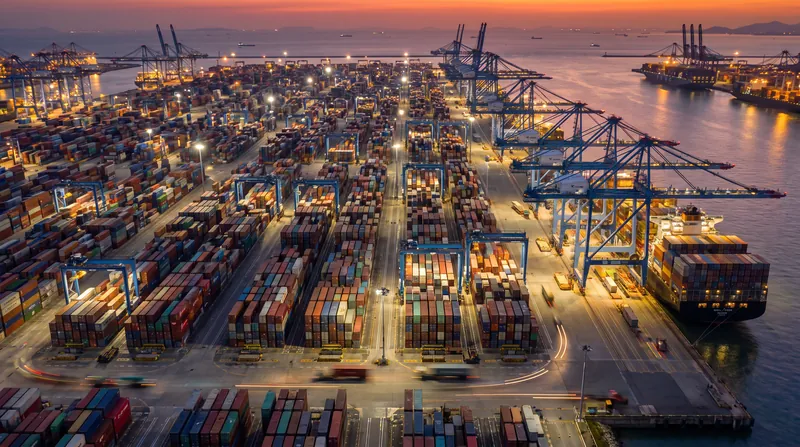
Aboard an 8,700-TEU Lima-class container ship navigating the North Atlantic, deck space is measured in inches. Every available square foot is stacked with steel boxes carrying global trade. But in mid-2027, A.P. Moller-Maersk will sacrifice a five-meter circle of that premium real estate to bolt down a 115-foot-tall spinning cylinder.[1][2]
The Danish shipping giant signed an agreement in early September 2026 with UK-based Anemoi Marine Technologies to install a rotor sail on one of its active commercial vessels. While wind-assisted propulsion has been tested on bulk carriers and roll-on/roll-off ships, this marks the first time a rotor sail will be retrofitted onto a fully operational container ship.[2][4][6]
The pilot project arrives as the maritime industry faces a dual squeeze: soaring operational costs and tightening environmental mandates. Shipping fuel prices have spiked by as much as 76% in some regions following recent geopolitical conflicts, while the International Maritime Organization continues to advance strict emissions regulations.[1][3]
For Maersk, which consumes roughly 100 tons of fuel per day on a vessel of this size, finding incremental efficiencies is no longer optional. The company has committed to achieving net-zero emissions across its ocean fleet by 2040, a target that requires overhauling how thousands of massive vessels move through the water.[1][5][6]
The technology stepping in to bridge that gap does not look like a traditional canvas sail. Instead, Anemoi’s system relies on a powered vertical cylinder that rotates continuously in the wind.[3][6]
As wind passes around the spinning column, it generates aerodynamic lift through a physics phenomenon known as the Magnus effect. "Our rotor sails work on the same basic principle of creating a pressure difference, but instead of a wing, we use a tall spinning cylinder," explained Anemoi CEO Clare Urmston.[1][2][6]
The rotation speeds up the airflow on one side of the cylinder while slowing it down on the opposite side. This pressure differential produces a forward thrust that pushes the ship through the water, directly reducing the mechanical load required from the vessel's main diesel engines.[1][6]
The theoretical savings are substantial. According to Anemoi's specifications, a single rotor sail of this size can reduce a ship's fuel consumption by approximately one ton per day under optimal conditions. That fuel reduction translates directly to eliminating roughly three tons of carbon dioxide emissions daily.[2][4][5]
While Anemoi typically installs three to five of these 35-meter cylinders on a single bulk carrier, Maersk is limiting this initial pilot to a single unit. The cautious approach reflects the unique geometric constraints of container shipping.[2][4][6]
Unlike flat-decked bulk carriers hauling iron ore or grain, container ships are stacked high with modular cargo that disrupts airflow and requires massive overhead cranes for port operations. Finding a location for a 10-story spinning tower that does not interfere with cargo handling is a complex engineering challenge.[2][3]
Furthermore, container ships operate on strict, high-speed liner schedules. Nick Contopoulos, Anemoi's chief commercial officer, noted that these dedicated routes actually offer a hidden advantage. "Knowing the predictability of wind and the vessel's operating speed, you can target the high wind profile routes, which improves the business case and the return on investment," Contopoulos said.[3]
The financial math heavily depends on those routing decisions. Industry estimates suggest the payback period for a rotor sail installation is typically around five years, though that timeline accelerates for vessels operating in European waters subject to stricter carbon pricing.[1]
Maersk plans to deploy the retrofitted Lima-class vessel on its standard North and South Atlantic commercial routes. The company will spend the months following the mid-2027 installation gathering real-world data on how the Magnus effect interacts with the ship's existing propulsion plant, service speed requirements, and schedule reliability.[2][4][5][6]
"Wind-assisted propulsion is one of several promising maritime solutions with the potential to improve vessel efficiency and reduce emissions," said Ole Graa Jakobsen, Maersk's head of fleet technology. He framed the pilot as a necessary step to build practical experience before committing to wider deployment.[3][4]
The rotor sail is just one piece of a broader, fuel-agnostic decarbonization strategy for the shipping line. By 2027, Maersk expects to have 25 dual-fuel ships in service capable of running on lower-emission bio-methanol and e-methanol, representing a quarter of its fleet.[5]
Key points
- Maersk will install a 115-foot rotor sail on an 8,700-TEU container ship in mid-2027.
- The pilot marks the first time a rotor sail will be retrofitted onto a fully operational container ship.
- The spinning cylinder uses the Magnus effect to generate forward thrust, reducing the load on the main engine.
- A single rotor sail can save roughly one ton of fuel and three tons of CO2 emissions per day.
What we don’t know
- How frequently the North Atlantic winds will align with the vessel's strict liner schedule to produce optimal thrust.
- Whether the 35-meter cylinder will cause unforeseen delays during port cargo-handling operations.
- How many rotor sails Maersk might ultimately deploy across its fleet if the single-unit pilot succeeds.
How we got here
2015
Anemoi Marine Technologies is founded in London to develop wind propulsion systems for commercial shipping.
2024
Anemoi successfully installs five 35-meter rotor sails on a 400,000-ton bulk carrier.
September 2026
Maersk signs an agreement to pilot a rotor sail on a container ship for the first time.
Mid-2027
Scheduled installation of the rotor sail on a Maersk Lima-class vessel.
2040
Maersk's target year for achieving net-zero emissions across its entire ocean fleet.
- Maritime Fleet Operators
- Focused on the practical integration of new technology into existing logistics networks without disrupting strict liner schedules.
- Clean Technology Developers
- Emphasize the physics and theoretical efficiency gains of wind-assisted propulsion as a near-term decarbonization tool.
- Environmental Advocates
- View mechanical efficiency upgrades as a necessary bridge while the industry scales up production of zero-emission alternative fuels.
Perspectives this story doesn't cover
- Port Authority Operators
- Marine Insurance Underwriters
Sources
Source coverage
6 outlets
3 viewpoints surfaced





- [1]Fast CompanyClean Technology Developers
Maersk is testing a giant spinning cylinder to cut fuel use on cargo ships
Read on Fast Company → - [2]gCaptainMaritime Fleet Operators
Maersk to Test Rotor Sail on Containership in Industry First
Read on gCaptain → - [3]Seeking AlphaMaritime Fleet Operators
Maersk to try wind sails on container ship to cut fuel consumption
Read on Seeking Alpha → - [4]ESG TodayEnvironmental Advocates
Maersk Pilots Wind Sail to Cut Container Ship Fuel and Emissions
Read on ESG Today → - [5]Financial PortsClean Technology Developers
Maersk's 115ft rotor sail cuts fuel use by a tonne daily
Read on Financial Ports → - [6]The ConveyorEnvironmental Advocates
Maersk will test a rotor sail on a containership
Read on The Conveyor →
More in Business
See all →Bilateral Trade
US and China Finalize $60 Billion Reciprocal Tariff Reduction and Extend Trade Truce
5 sources
Maritime Shipping
Asian Port Congestion Absorbs 8.5% of Global Fleet Capacity, Expected to Persist Into 2027
4 sources
Supply Chain
Chinese Ports Handle Record 7.3 Million Containers in One Week as Exporters Rush Shipments
5 sources
Semiconductor Trade
South Korea Semiconductor Exports Surge 259% to Record $34.1 Billion on AI Demand
6 sources

Comments
Every angle. Every day.
Get Business stories with full source coverage and perspective breakdowns, free every day.