
Macro-Anxiety Rewrites Dating: 95% of Singles Prioritize Emotional Stability Over 'Spark'
Driven by economic pressures and global uncertainty, modern daters are abandoning the pursuit of instant chemistry in favor of emotional maturity and financial reliability.
Share this story
For decades, modern romance was governed by a single, elusive metric: 'the spark.' It was the butterfly-inducing rush of instant chemistry, heavily romanticized by Hollywood and gamified by the first generation of swipe-based dating apps. If a first date didn't deliver an immediate, intoxicating high, the prevailing wisdom was to cut losses and move on to the next match.
But in 2026, the cultural obsession with the spark is rapidly fading, replaced by a profound craving for something far less cinematic but infinitely more sustainable: stability. Exhausted by a volatile world, singles are fundamentally rewriting the rules of attraction, opting for safe harbors over emotional rollercoasters.
The statistical shift is staggering. According to Bumble's latest global dating trends report, a massive 95% of singles now indicate that concerns about the future directly influence their dating choices and approach to relationships. Daters are actively screening for partners who offer emotional consistency and a shared, realistic vision for the years ahead.[1][7]
This 'relationship reset' is echoed across the industry. Match's comprehensive Singles in America study reveals that emotional maturity is now the single most desired trait in a partner, sought by 92% of respondents. In a striking departure from historical norms, physical attractiveness has plummeted down the priority list, with singles prioritizing trust, communication, and self-awareness over looks.[2][5]
Sociologists and relationship experts attribute this shift to a phenomenon known as 'macro-anxiety.' Today's daters are navigating a relentless barrage of external stressors: persistent inflation, a daunting housing market, climate uncertainty, and geopolitical instability.
When the macro environment feels chaotic and unpredictable, the human nervous system naturally seeks a micro environment—a home and a partnership—that feels safe and regulated. A volatile, 'spark-heavy' relationship that runs hot and cold simply adds to a person's allostatic load. A stable, predictable partner, conversely, acts as a crucial buffer against the outside world.
The Kinsey Institute, which partners on major dating demographic studies, notes that this represents a collective psychological maturation. Singles are increasingly recognizing that the anxiety of an unpredictable partner is not a substitute for genuine passion, and that true intimacy requires a foundation of safety.[8]
Economics play an equally massive role in this romantic rewiring. The sheer cost of being single in 2026 has transformed dating from a casual pastime into a high-stakes search for a reliable teammate. Real estate platforms like Zoocasa highlight that with single-family home prices soaring, economic security and housing stability have become just as important as personality compatibility.[3]
For many, the dream of homeownership or even comfortable renting requires a dual-income household. Consequently, 59% of women now explicitly seek partners who provide financial reliability alongside emotional consistency. Romantic partnerships are increasingly viewed through the lens of a long-term financial merger.[1]
Then there is the reality of 'dateflation.' The cost of going out has surged, with the average single spending $213 per month on dating, a figure that jumps to over $310 for active daters. People simply cannot afford to go on endless, expensive dinners with incompatible strangers just to see if a spark ignites.[2][4]
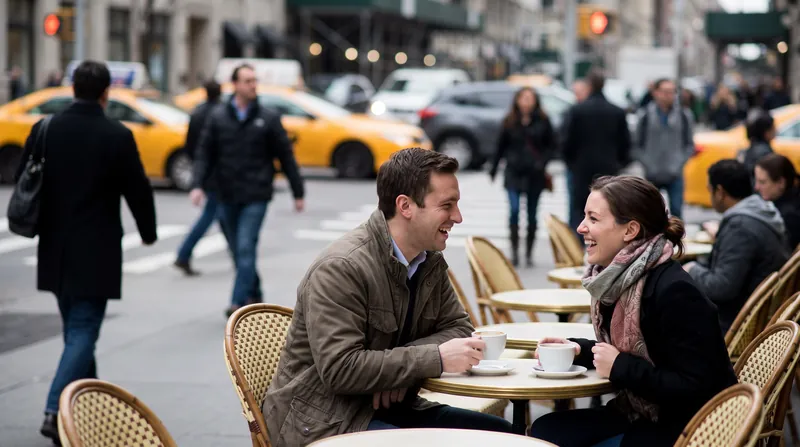
This financial pressure has birthed the era of 'slow dating' and the low-stakes first date. The extravagant Friday night dinner has been widely replaced by the Tuesday afternoon coffee or a walk in the park. Daters want to establish baseline compatibility and emotional safety before investing significant time or money.
The conversations happening on these dates have also changed. Topics that were once considered taboo for early courtship—credit scores, therapy history, mental health routines, and long-term financial goals—are now being discussed openly on dates two or three.
Dating profiles reflect this new pragmatism. A recent Forbes Health survey analyzing dating app behaviors found that users are highly attuned to 'icks' related to instability. Profiles that lack a clear sense of direction or rely entirely on superficial party photos are frequently bypassed in favor of those that signal groundedness and intention.[6]
Dating experts note that users are looking for subtle cues of reliability. A prompt answer about a consistent Sunday routine or a photo demonstrating a long-term hobby now carries more weight than a flashy vacation picture. The goal is to project safety, not just excitement.[7]
Dating platforms themselves are being forced to adapt to this new reality. The gamified, rapid-fire swiping mechanics that defined the 2010s are giving way to features that encourage deeper filtering, longer profiles, and intentional matchmaking. The industry is realizing that its user base is experiencing profound app fatigue and wants tools that facilitate serious connection.[4]
Ultimately, the death of the spark and the rise of the 'safe harbor' relationship is a deeply optimistic trend. By prioritizing emotional intelligence, financial transparency, and mutual support, today's singles are building a foundation for modern love that is far more resilient than the generations before them. They are proving that true romance isn't about escaping reality, but finding someone reliable to face it with.
Key points
- 95% of singles now prioritize future stability over instant chemistry when choosing a partner.
- Emotional maturity has replaced physical attractiveness as the most desired trait in modern dating.
- Economic pressures and 'dateflation' are forcing singles to seek financially reliable partners.
- Dating apps are shifting away from gamified swiping toward intentional, long-term matchmaking features.
Unanswered questions
- Whether the preference for stability will persist if macroeconomic conditions significantly improve.
- How the decline of 'the spark' will impact long-term divorce rates and relationship satisfaction over the next decade.
- The exact degree to which dating apps can successfully pivot their business models away from gamified swiping.
How we got here
2012–2019
The 'Swipe Era' gamifies dating, prioritizing instant physical chemistry and rapid-fire casual dates.
2020–2021
The pandemic forces a 'dating reset,' introducing video dates and a sudden focus on intentionality and health.
2022–2024
Surging inflation and housing costs introduce 'dateflation,' making casual dating financially unsustainable for many.
2025–2026
Emotional and financial stability officially overtake 'the spark' as the primary drivers of romantic compatibility.
- Behavioral Psychologists
- Emphasize nervous system regulation and the maturation away from toxic chemistry.
- Economic Realists
- Highlight housing costs and inflation as the primary drivers of pragmatic dating.
- Dating Industry Analysts
- Focus on app fatigue and the pivot toward intentional matchmaking features.
Perspectives this story doesn't cover
- Couples who met before the current economic shifts
- Singles opting out of dating entirely due to burnout
Sources
Source coverage
8 outlets
3 viewpoints surfaced








- [1]BumbleDating Industry Analysts
Bumble Global Dating Trends 2025: Future Stability Takes Center Stage
Read on Bumble → - [2]MatchDating Industry Analysts
Match Releases Annual Singles in America Study
- [3]ZoocasaEconomic Realists
How Housing Costs Are Redefining Dating: Why Stability Now Matters More Than Sparks
- [4]Global Dating InsightsDating Industry Analysts
Match's Singles in America Report Highlights 'Relationship Reset'
- [5]TimeBehavioral Psychologists
Emotional Maturity Is Now the Hottest Trait in a Partner
Read on Time → - [6]Forbes HealthDating Industry Analysts
Survey Reveals Top Dating Profile Turn-Offs And Attractions
- [7]Wealthy Single MommyEconomic Realists
How to talk about the 'future' on your dating profile
- [8]Kinsey InstituteBehavioral Psychologists
Singles in America: Decades of Data on Modern Romance
More in Lifestyle
See all →Modern Romance
Major Study Finds Only 30% of Young Adults Are Actively Dating as Singles Pivot to Financial Stability and Analog Meetups
2 sources

Dating Economics
New Study: 52% of Young Adults Say They Cannot Afford to Date, Making Money the Top Barrier
7 sources

Digital Wellness
The Rise of 'Slow Dating': How Intentionality is Curing Swipe Fatigue
4 sources

Demographic Shift
'Economic Cost of Solitude' Emerges as Major Driver of Declining Marriage and Fertility
5 sources
Comments
Every angle. Every day.
Get Lifestyle stories with full source coverage and perspective breakdowns, free every day.