
Lakey Peterson's Resurgence Shakes Up the 2026 WSL Title Race as Traditional Points Format Returns
Veteran surfer Lakey Peterson sits at World No. 2 heading into the Pacific leg, capitalizing on the WSL's return to a season-long points format to challenge for her maiden World Title.

Share this story
As the World Surf League (WSL) Championship Tour pauses for a mid-summer break ahead of the grueling Pacific leg, the women’s standings are tighter than they have been in a decade. At the center of the drama is American veteran Lakey Peterson, whose remarkable resurgence has her tied for World No. 2. After years of battling injuries and agonizingly close finishes, Peterson is capitalizing on a massive structural shift in the sport.
The 2026 season marks the highly anticipated return of the traditional, season-long points format, abandoning the controversial one-day WSL Finals that defined the last five years. For a surfer renowned for her relentless consistency and tactical brilliance across diverse conditions, the format change has acted as a career lifeline, putting a maiden World Title squarely within her grasp.[1][4]
The current leaderboard paints a picture of a generational clash. Brazilian phenom Luana Silva currently wears the coveted Yellow Jersey, sitting at World No. 1 with 20,345 points after a blistering start to the year. Right on her heels is Peterson, deadlocked at 19,490 points with Hawaiian powerhouse Gabriela Bryan.
Defending 2025 World Champion Molly Picklum looms dangerously in fourth place with 17,290 points, while Californian prodigy Caitlin Simmers rounds out the top five. The tight spread at the top means the Yellow Jersey could change hands multiple times before the season concludes, setting the stage for a dramatic second half of the year.[2]
Luana Silva’s grip on the leader's jersey is a story in itself. The young Brazilian has been a revelation this season, combining explosive aerial maneuvers with a newfound competitive maturity. Her ascent to World No. 1 has energized the massive Brazilian fanbase, proving that the "Brazilian Storm" is just as potent on the women's side of the draw.
However, Silva's lead is precarious; a margin of less than 1,000 points separates her from Peterson and Bryan, meaning a single stumble in the upcoming events could see her stripped of the top ranking.
Peterson’s position near the summit is a direct result of the WSL’s decision to revert to its historical roots. From 2021 to 2025, the World Champion was crowned in a "sudden death" shootout at Lower Trestles in California, where the top five surfers competed in a single-day bracket.
While it provided made-for-television drama, critics argued it undermined the fundamental premise of professional surfing: proving mastery across a wide variety of global ocean conditions. Now, the 2026 champion will be the surfer who accumulates the most points from their best nine results across the grueling 12-stop tour.[1][2][3]
"The return to the points system means every single heat matters again," noted an analysis by SURFER Magazine earlier this year. "You can't just coast through the mid-season and hope to turn it on for one afternoon at Trestles." Under the new rules, consistency is king.
The season will culminate at the iconic Banzai Pipeline in Hawaii, where the revamped Pipe Masters will award 15,000 points—a massive 50 percent increase over a standard Championship Tour event. This back-loaded structure ensures the title race will likely come down to the final heats of the year in some of the most dangerous waves on the planet.[1][3]
Peterson’s 2026 campaign has been a masterclass in the exact type of steady accumulation the new format demands. She fired a massive warning shot in April, claiming a crucial victory at the Margaret River Pro in Western Australia.
Her performance at Main Break showcased her signature power surfing, proving that her rail game remains one of the most lethal weapons in the women's draw. Since that victory, she has successfully navigated the tricky beach breaks of El Salvador and Rio de Janeiro, avoiding the early-round upsets that have plagued some of her younger competitors.
The path to the top has been complicated by the WSL's decision to expand the women's field from 16 to 24 surfers for the 2026 season. This expansion, combined with the return of legendary World Champions Stephanie Gilmore and Carissa Moore as season wildcards, has made the early rounds significantly more treacherous.
Surfers who previously enjoyed protected seeding now find themselves facing off against multiple World Title holders in the opening heats. Despite the heavier competition and the constant threat of elimination, Peterson has thrived, using her decade-plus of tour experience to outmaneuver opponents in shifting lineups.[1][2]
Looking ahead, the tour is about to shift dramatically. In August, the athletes will trade the playful beach breaks of the Americas for the terrifying reef passes of the South Pacific. The Lexus Tahiti Pro at Teahupo'o and the Corona Fiji Pro at Cloudbreak will test the women in massive, hollow left-handers over shallow coral.
These heavy-water stops will be the ultimate proving ground for Peterson. While she is universally celebrated for her carving ability on open faces, her comfort and commitment in cavernous barrels will be heavily scrutinized as she battles Silva and Bryan for the top spot.
Defending 2025 World Champion Molly Picklum is also lurking dangerously in the rearview mirror. Currently sitting in fourth place, the Australian claimed her maiden world title in historic fashion at Cloudbreak last year. As the tour prepares to return to Fiji, Picklum is widely considered the favorite to take the event win.
Her fearless approach to heavy reef breaks makes her a massive threat to Peterson, Silva, and Bryan. If Picklum strings together victories in Tahiti and Fiji, she could easily vault into the number one position before the tour even reaches its final stages.[2]
The stakes in the Pacific are further amplified by the impending "postseason" cut. Following the ninth stop at Lower Trestles in September, the field will be drastically reduced. Only the top 16 women will advance to the final three events: the Surf Abu Dhabi Pro in the United Arab Emirates, the MEO Rip Curl Pro in Portugal, and the grand finale at Pipeline.
Securing strong results in Tahiti and Fiji is paramount for Peterson, not just for survival, but to ensure she carries a top seed into those critical final events where the points are magnified.[1][2]
Adding a completely new variable to the title race is the introduction of the Surf Abu Dhabi Pro in October. As the first event of the reduced-field postseason, it will take place in a state-of-the-art wave pool featuring Kelly Slater’s artificial wave technology.
This environment strips away the unpredictability of the ocean, turning the competition into a pure test of technical perfection and repetition. For a technician like Peterson, the wave pool could be a massive advantage, provided she can maintain her ranking through the unpredictable ocean events that precede it.[1]
For Lakey Peterson, the math is simple, but the execution will require nerves of steel. She must maintain her trademark consistency through the most dangerous waves on tour, fending off a hungry younger generation and returning legends alike. If she can hold her form and conquer the heavy water ahead, 2026 could finally be the year she transitions from a perennial contender to a World Champion. In a season that celebrates the marathon over the sprint, Peterson is proving she has the endurance to go the distance.
Key points
- Lakey Peterson is tied for World No. 2 in the 2026 WSL standings, trailing leader Luana Silva.
- The 2026 season marks a return to the traditional points format, eliminating the one-day WSL Finals.
- The new format heavily rewards season-long consistency, playing to Peterson's strengths as a 15-year tour veteran.
- The upcoming Pacific leg features dangerous reef breaks in Tahiti and Fiji that could scramble the current leaderboard.
- The season will conclude at the Pipe Masters in Hawaii, which offers a massive 15,000 points to the winner.
How we got here
May 2025
The WSL announces a major format overhaul for 2026, eliminating the one-day WSL Finals in favor of a season-long points race.
April 2026
Lakey Peterson claims a crucial victory at the Margaret River Pro, cementing her status as a top title contender.
June 2026
Luana Silva takes the Yellow Jersey after strong performances during the Latin American leg of the tour.
August 2026
The Championship Tour will resume with the Lexus Tahiti Pro, kicking off the critical heavy-water Pacific leg.
- Format Traditionalists
- Argue that a season-long points system is the only legitimate way to crown a World Champion in a sport dependent on varied ocean conditions.
- Athlete Camp
- Focus on the physical and mental endurance required to perform across 12 distinct global stops over a nine-month period.
- Progressive Format Advocates
- Miss the one-day WSL Finals, arguing it provided a guaranteed, high-stakes climax that was better for mainstream sports broadcasting.
Perspectives this story doesn't cover
- Casual fans who prefer the immediate drama of a one-day playoff
- Local communities hosting the new tour stops
Sources
Source coverage
4 outlets
3 viewpoints surfaced




- [1]SURFER MagazineFormat Traditionalists
The CT By The Numbers: 9-Stop 'Regular Season' and a By-Design Pipe Finish
Read on SURFER Magazine → - [2]Wikipedia
2026 World Surf League
Read on Wikipedia → - [3]ReutersFormat Traditionalists
Pipeline back as world surf tour finale in 2026
Read on Reuters → - [4]Red Bull SurfingFormat Traditionalists
In 2026, the WSL Championship Tour is going back to the good old days
Read on Red Bull Surfing →
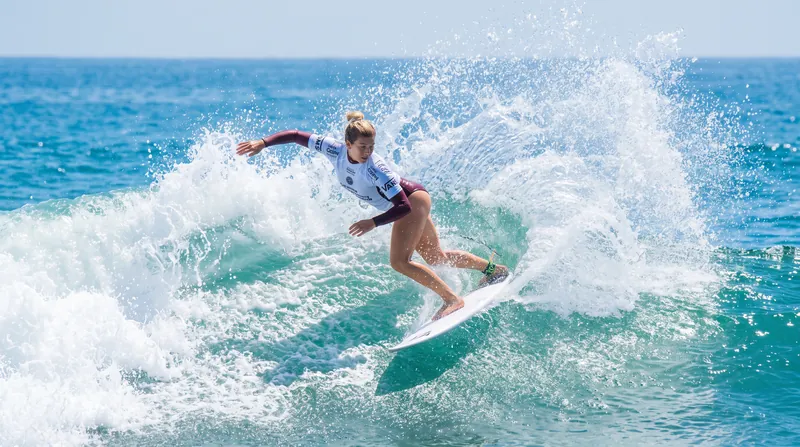
More in Sports
See all →Standings
WSL Standings: Seth Moniz Surges at Tahiti Pro to Keep Championship Tour Hopes Alive
4 sources
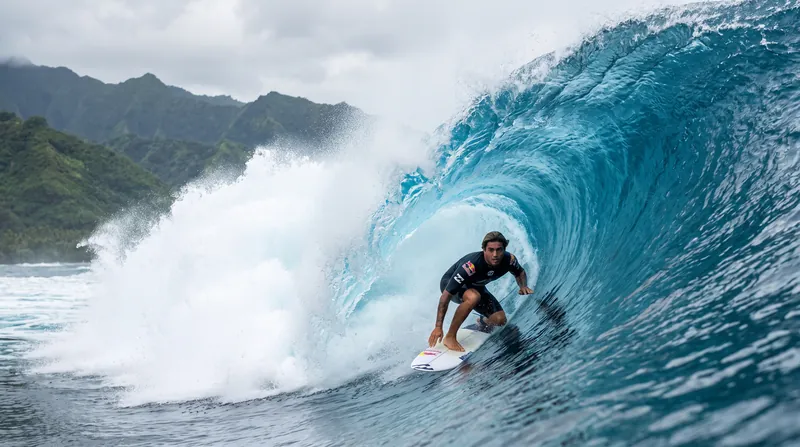
Standings
Fioravanti Leads WSL Standings Into Tahiti as Revived Points Format Reshapes Title Race
6 sources
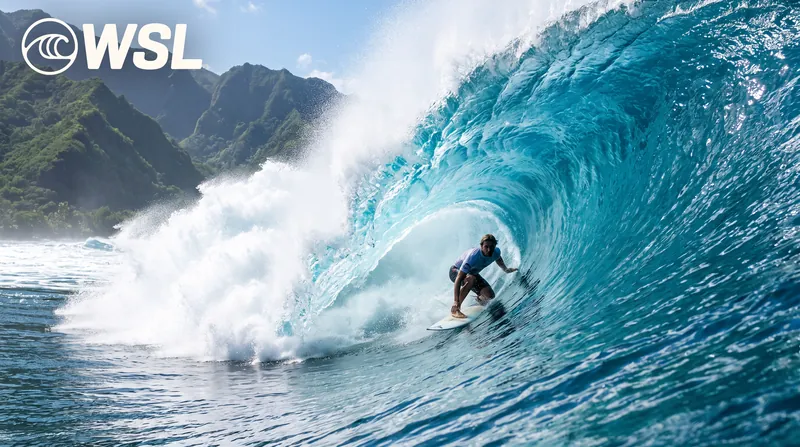
Standings
Carissa Moore's Historic Wildcard Campaign: Five-Time Champion Surges to World No. 2 in 2026 Standings
4 sources
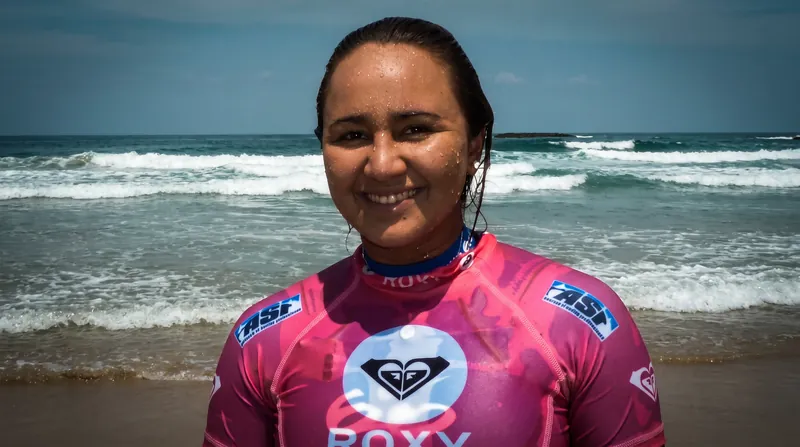
Standings
WSL Standings: Gabriel Medina and Crosby Colapinto Set for High-Stakes Bubble Clash at Fiji Pro
6 sources
Comments
Every angle. Every day.
Get Sports stories with full source coverage and perspective breakdowns, free every day.