
Google Ends Decade-Long Monopoly, Opens Android to Rival App Stores for Epic Games, Amazon, and Others
Following a decisive antitrust defeat to Epic Games, Google will allow rival app marketplaces to be downloaded directly from the Google Play Store in the US starting July 22. The move marks a historic shift in the Android ecosystem, giving consumers unprecedented choice while dismantling Google's tight control over app distribution.
By Tariq Nasser

Share this story
Starting July 22, 2026, US Android users will experience a fundamental shift in how they get their apps. For the first time, Google will allow third-party app marketplaces—such as the Epic Games Store and Amazon Appstore—to be downloaded directly from inside the Google Play Store. The move marks a historic dismantling of the walled garden that has defined the Android ecosystem for over a decade, granting consumers unprecedented choice without the friction of complex workarounds.[2][3][5]
The shift is powered by Google's newly unveiled "Play Catalog Access Program." Approved rival stores can now pull the entire Google Play catalog of apps and games directly into their own storefronts. This means users can browse, discover, and install their favorite applications through a competitor's interface, all while relying on the Android ecosystem's native architecture. Developers are automatically enrolled in the catalog-sharing program, though they retain the right to explicitly opt out if they prefer to remain exclusive to Google's native storefront.[4][5]
This monumental platform update is not a voluntary feature release. It is the culmination of a bruising, multi-year antitrust battle between the search giant and Epic Games, the creator of the blockbuster video game Fortnite. In December 2023, a federal jury in California unanimously found that Google operated an illegal monopoly over Android app distribution and charged extortionate fees to developers.[3][6][7]
Following that decisive jury verdict, US District Judge James Donato issued a sweeping permanent injunction in October 2024, ordering Google to tear down its barriers to entry. Google spent the subsequent 18 months fiercely fighting the order in appellate courts. The company argued that opening the ecosystem would compromise user security, flood devices with malware, and create a "feudal security" nightmare where consumers could no longer trust their devices.[6][7][8]
In late 2025, it appeared the two tech behemoths might reach a compromise. Google and Epic proposed a "Registered App Stores" program, which would have required users to sideload rival stores—a clunky, multi-step process that often deters average consumers from leaving the default ecosystem. The settlement reportedly included a secret $800 million payment and would have spared Google the indignity of hosting its rivals directly inside its own crown jewel.[2][5]
However, the compromise faced intense scrutiny. A court-appointed economist, MIT's Nancy Rose, noted in a July report that the sideloading plan was highly unlikely to help rivals overcome Google's entrenched grip, as users rarely abandon the storefronts they already know. Facing a skeptical court and a looming hearing, Google and Epic abruptly withdrew their modified settlement on July 15, 2026.[2][5][6]
By withdrawing the motion, Google effectively surrendered its legal resistance, agreeing to fully comply with Judge Donato's original, strict injunction. Google spokesperson Dan Jackson stated that the company chose to withdraw the motion rather than "prolonging this process which creates uncertainty for the ecosystem." The capitulation means that starting next week, the Play Store will actively distribute the very competitors designed to undercut it.[1][2][3][5]
While the door is now open, Google is not walking away empty-handed. Rival storefronts seeking access to the Play catalog must pay a $5,000 upfront security review fee, followed by a $5,000 annual maintenance fee. Furthermore, if a user downloads an app through a rival store but the transaction utilizes Google's underlying download infrastructure, Google's standard service fees still apply.[2][4][7]
To address its long-standing security arguments, Google has imposed strict technical requirements on the new entrants. Participating stores must maintain malware installation rates below defined limits and operate exclusively within the United States. If a rival store fails to adequately vet its software or protect user data, Google retains the authority to revoke its catalog access to protect the broader Android ecosystem.[2][4][5]
As the July 22 launch date approaches, the tech industry is bracing for a new era of mobile competition. Companies like Microsoft, which has been quietly developing an Xbox mobile store, and Amazon are perfectly positioned to capitalize on the newly opened ecosystem. While it remains to be seen if consumers will actually change their downloading habits, the legal precedent is set: the era of the undisputed app store monopoly is officially over.[1][4][5][7]
Perspectives explored
Open Ecosystem Advocates
Developers and digital rights groups argue that breaking the monopoly lowers fees and fosters innovation.
For years, developers have argued that the 30% commission charged by Google and Apple stifles innovation and forces higher prices onto consumers. Digital rights organizations like the Electronic Frontier Foundation contend that true device security comes from competition, not from a single corporate gatekeeper. By allowing alternative storefronts, advocates believe the market will naturally select for platforms that offer better curation, lower fees, and more developer-friendly policies.
Platform Operators
Google maintains that centralized control is necessary to protect users from malware and fund ecosystem development.
Google has long defended its walled garden as a necessary security measure. The company argues that vetting every app through a centralized Play Store protects users from malicious software, data theft, and poorly optimized code. Furthermore, Google contends that the fees collected from app sales fund the continuous development of the Android operating system, which is provided to device manufacturers for free. They warn that fragmenting the ecosystem could lead to a 'feudal security' landscape where users are left vulnerable.
Rival Storefronts
Competitors view the opening as a lucrative opportunity to capture market share and bypass traditional gatekeeper fees.
Companies with massive existing user bases, such as Microsoft and Amazon, see the Play Catalog Access Program as a golden ticket. Microsoft has been openly developing an Xbox mobile store, aiming to distribute games directly to consumers without surrendering a cut to Google. For these tech giants, the ability to operate a native storefront on Android devices means they can finally leverage their own payment processing systems and offer exclusive content, fundamentally altering the economics of mobile gaming and software distribution.
Key points
- Starting July 22, 2026, Google will allow third-party app stores to be downloaded directly from the Google Play Store in the US.
- The policy change is the result of a permanent court injunction following Google's antitrust defeat to Epic Games.
- Rival stores can pull the entire Google Play catalog into their own storefronts through the new Play Catalog Access Program.
- Participating storefronts must pay a $5,000 annual fee and maintain strict security standards to remain on the platform.
Open questions
- It remains unclear how many consumers will actually change their habits and download alternative app stores, given the convenience of the default Google Play Store.
- The exact list of third-party stores that will be available on launch day has not been officially confirmed by Google.
- It is unknown if or when regulatory bodies in the European Union and other global markets will force Google to implement similar catalog-sharing programs outside the US.
Timeline
August 2020
Epic Games sues Google, alleging the Play Store operates as an illegal monopoly.
December 2023
A federal jury unanimously rules against Google, finding it engaged in anti-competitive practices.
October 2024
Judge James Donato issues a permanent injunction ordering Google to open Android to rival stores.
November 2025
Google and Epic propose a compromise 'Registered App Stores' program relying on sideloading.
July 15, 2026
The companies withdraw their compromise, forcing Google to fully comply with the original open-store mandate.
July 22, 2026
Third-party app stores become officially downloadable from within Google Play in the US.
- Open Ecosystem Advocates
- Developers and digital rights groups argue that breaking the monopoly lowers fees and fosters innovation.
- Platform Operators
- Google maintains that centralized control is necessary to protect users from malware and fund ecosystem development.
- Rival Storefronts
- Competitors view the opening as a lucrative opportunity to capture market share and bypass traditional gatekeeper fees.
Perspectives this story doesn't cover
- Independent app developers
- Cybersecurity researchers
Sources
Source coverage
8 outlets
3 viewpoints surfaced






- [1]The VergeOpen Ecosystem Advocates
Google to open Play Store to rival app stores following Epic Games antitrust defeat
- [2]The Next WebPlatform Operators
Google will start carrying rival app stores inside Google Play on 22 July
- [3]CNETRival Storefronts
Google Play Will Soon Let You Download Third-Party App Stores
Read on CNET → - [4]The LECRival Storefronts
Google to open Play Store to third-party app stores in US
- [5]EngadgetOpen Ecosystem Advocates
Third-party app stores are coming to Android phones in the US soon
- [6]Outlook BusinessPlatform Operators
Google Ends Legal Fight With Epic Games, to Open Play Store to Rival App Stores in US
- [7]The Hans IndiaRival Storefronts
Google Play opening to third-party app stores
- [8]Electronic Frontier FoundationOpen Ecosystem Advocates
Epic Games v. Google: Why Competition Makes Users More Secure

More in Technology
See all →EU App Store
Apple Overhauls EU App Store Terms: Replaces Per-Install Fee with 5% Commission
3 sources
Kids Code Act
New Jersey Mandates 'Kids Code Act,' Forcing App Redesign for Users Under 18 by 2027
8 sources

App Store Regulation
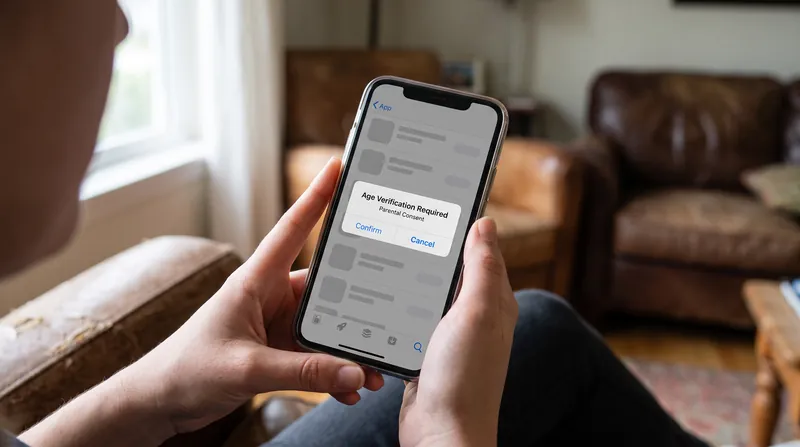
Texas App Store Law Mandates New Age Verification and Parental Consent Systems for All App Downloads
8 sources
App Store Ecosystem
Apple Announces Sweeping App Store Policy to Purge Stagnant and Low-Quality Apps
7 sources
Comments
Every angle. Every day.
Get Technology stories with full source coverage and perspective breakdowns, free every day.